FEATURE| February 16, 2010
3 MIN READBy SLOAN RAMOS
www.nordis.net
Education either functions as an instrument which is used to facilitate integration of the younger generation into the logic of the present system and bring about conformity or it becomes the practice of freedom, the means by which men and women deal critically and creatively with reality
and discover how to participate in the transformation of their world.
— Paolo Freire, Pedagogy of the Oppressed
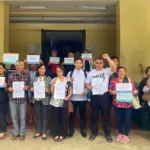
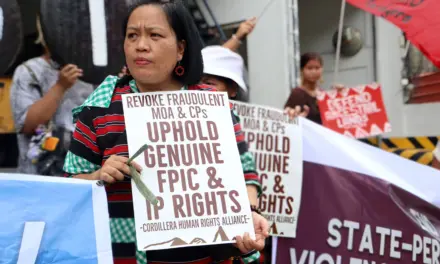
Fortunately, the students of UP Los Banos proved education to be a practice of freedom, as manifested in their campus walk-out against the proposed large class policy last January 29. Around 1000 teachers and students walked out of their morning classes in protest to the proposal of the administration, as embodied by UPLB Chancellor Luis Rey Velasco’s memo to increase the size of foundational and general education classes from 25-40 students to 120-175 students per class. Once again, students proved that true learning is not found in formal class lectures, especially when only filled with ideas praising the concept of being “globally competitive,” speaking fluent English and serving foreign masters in other countries, dreaming of working in multinational corporations that plunder your country’s resources, or making yourself care for the sick and the elderly abroad while medical services are badly needed in your own country, and still have pride in yourself for you are a “bagong bayani.”
Of course, the present administration has all the good reasons in the world to justify policies such as conducting large classes. According to Chancellor Velasco, the main objective of this policy is to increase student accomodation, given that “Every year, more than 1,000 students are in the wait-list. There are no more slots (so) we have to reject them.” After systematically restricting student access to this premier state university by increasing tuition fees by up to 300%, the administration suddenly talks about increasing student accomodation. It is a good thing that the “university inside the university” (as professor Judy Taguiwalo calls the radical activist movement inside the university) continues to strive to enlighten students about this lie, despite political persecution and repression.
Chancellor Velasco further justified the intentions of the large class policy by citing a study which says that “The test implementation of large classes reveals that class size does not affect student performance. In some courses, an increase in student performance was noted.” Such an ineffective cover-up for the true agenda: a cost cutting measure. As stated by the Manifesto of Unity Against the Large Class Policy: “Large Class scheme is a cost-cutting measure of the UPLB administration to augment the lack of government subsidy as we are to face a P12.7 B budget deficit for the academic year 2010-2011.” Using pseudo-scientific and statistical tests has long been used by the government to pursue its neoliberal agenda, with similar statistical models used to justify development under trade liberalization in the WTO, and the viability of attracting foreign investment as engines of economic growth. Only the ones blinded by their own ideological biases are not able to see that such neoliberal policies only resulted to the dislocation of farmers and indigenous peoples from their lands, the plunder of our natural reources, the push of worker’s wages to starvation levels and of course, the increasing wealth of monopoly capitalists and their local cohorts.
This is precisely the reason why the government is trying its very best to pursue its neoliberal agenda in the educational sector. With the systematic withdrawal of state subsidy to education, and making state universities starve without the much needed operational budget, this will force them to search for their own funds. And, making UP as the government’s laboratory for its educational policies, the commercialization of UP Diliman’s land to multinational corporations, dubbed as the UP Ayala Technohub was implemented to make the tie-up between the university and corporations more fluid. Then, changing the orientation of the UP Charter to become focused on “global competitiveness” formalized the university’s commitment to adhere to neoliberalism. And then this: promoting a large class policy that, as Youth Lead coordinator Maria Elena Carlos says, “(will) generally overhaul teaching approaches and lessen student participation and critical discussions in class.”
Killing critical thinking and student participation in classess is the final nail in the neoliberal coffin of Philippine education. Such scheme will only make students integrate the logic of the present educational system: train Philippine students to become the underpaid workforce of global monopoly capitalism, and hailing them as the “bagong bayani” of the country. Fortunately, the “university inside the university” is here to confront this agenda.#nordis.net