FEATURE| January 24, 2010
2 MIN READBy UNIVERSITY OF THE PHILIPPINES-BAGUIO OPA
www.nordis.net
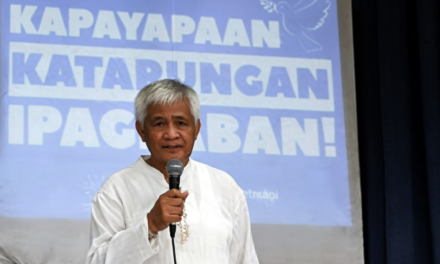
BAGUIO CITY — The University of the Philippines in here invites the public to a Free Forum on Social Studies Curriculum and Textbooks in Basic Education.
To clarify content as well as pedagogical issues in History and Social Studies in the elementary and secondary curricula including recommendations that will facilitate improvements in the teaching of History and Social Studies, by the Department of History and Philosophy University, College of Social Sciences of the University of the Philippines Baguio will conduct a the ‘Forum on Social Studies Curriculum and Textbooks in Basic Education on February 12, 2010, 2 p.m. to 5 p.m. at the Bulwagang Juan Luna, University of the Philippines Baguio.
Dr. Maria Serena Diokno, a distinguished Filipino Historian and Consultant for Philippine textbooks and curriculum, will deliver a presentation entitled, “Making a Case for History in Basic Education” which is a result of the findings of a project she conducted that reviewed the curriculum and textbooks of Social Studies in basic education in the public school sector.
Dr. Diokno’s findings show that History has been marginalized in the basic education curriculum. Although three out of four years in high school teach history (Philippine, Asia, and world), at the elementary level, history is taught only in grade five.
History is part of the rubric of Social Studies, which primarily includes geography, civics, and government and, in fourth year high school, economics. History, however, is not civics and neither is it the multidisciplinary term ‘social sciences’ or ‘social studies’. Aside from the conceptual fragility of this combination (see, among others, the selection of topics covered by the prescribed social studies curriculum), there is the issue of competencies and skills to be learned.
The most distinctive—and least appealing—feature of the Social Studies subject is factual recollection, not infrequently at the expense of thinking and analytical skills, even in secondary education. The content of the Social Studies curriculum at both levels, including the competencies that students are taught or expected to learn, as well as the quality of the textbooks overall, are substandard from the point of view of the discipline of History.
A number of measures ought to be taken to remedy the situation, but most important is the restoration of History in the basic education curriculum. History helps our young understand themselves, develop a sense of being Filipino, and introduces them to membership in a larger community. Equally important, History teaches students to think critically—a competence inherent in the discipline—which is essential to the practice of decision-making as individuals and as members of Filipino society.
We enjoin and encourage the participation of primary, secondary and tertiary level Social Studies/MAKABAYAN/History and Education teachers, as well as students of History to attend the forum.
The forum is free of charge. Interested participants are asked to REGISTER IN ADVANCE not later than February 7, 2010. Please call, fax or email Prof. Leah Abayao (Chair – Department of History and Philosophy) and Ms. Maureen Macaraeg the complete names, positions, titles and institutional affiliations. The following are our contact details: Tel/ Fax: 074-442-2427, Mobile: 09279282471 or 09228499691 Emails: maureen.macaraeg@yahoo.com or LEAbayao@yahoo.com. # nordis.net