FEATURE| November 29, 2009
3 MIN READBy ARTHUR L. ALLAD-IW
www.nordis.net
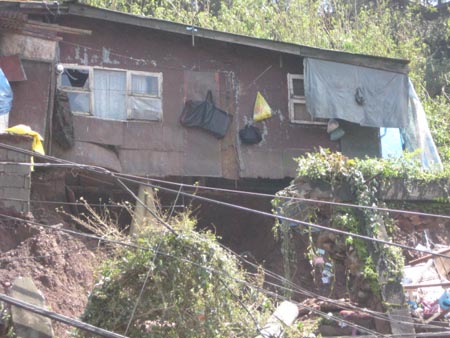
Photo by Aldwin Quitasol
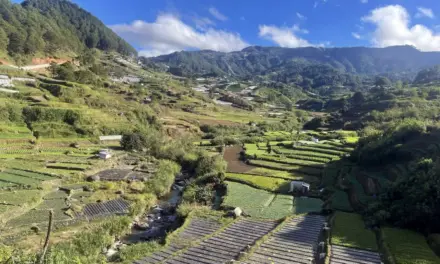
BAGUIO CITY — Environmental experts say this summer capital of the country is a landslide prone area.
Pepeng, a wake up call
Gaining painful lessons from typhoon Pepeng, clear programs attuned to the characteristics of the city must be adopted, environment experts here said.
Mayor Reinaldo Bautista Jr. told media that the city would draft plans to remove communities from these danger areas. He also promised to adopt the recommendations of the MGB.
When asked how the City Council would address the homeless left by typhoon Pepeng, Councilor Poppo Cosalan said they obtained a commitment from the National Housing Authority to allot lots in Tadiangan, Tuba, Benguet for the residents who needed to be resettled permanently.
Nordis learned that 313 houses were damaged by Typhoon Pepeng in the city where 99 houses were classified as totally damaged. These 99 are qualified for the Tadiangan housing where the houses would be payable for 30 years.
For temporary settlement, they are working on the lot in Irisan of this city as a site but still hope for funding yet, said Cosalan who heads the Council Committee on Urban Housing adding: “A survey is being done over another proposed site in the Sto. Tomas area”.
The city government’s plan however is still a proposal and it can not strategically address the common issue that most areas are susceptible to landslides, observed Ignacio Pangket, chairman of the urban poor group Organisasyon Dagiti Nakakurapay nga Umili ti Siyudad (ORNUS).
The availability of lands for housing project in the city and the affordability of these houses to residents are among the issues unanswered by the city officials’ plans.
Adopt concrete program
Residents here urged the city government to come up with a concrete plan to address the issues of residents in the areas considered highly susceptible to landslides.
Lawyer Jose Mencio Molintas said a concrete plan addressing the residence-related issues must evolve and must be strictly implemented by the city government. Without a concrete program, residents will always go back to their homes despite the danger posed on their lives.
The author learned from Molintas that the land system in the city is anchored on the town site sales application. Here, an alienable land is sold by the government to the highest bidder, a system based on the charter of the city which was introduced by the American colonizers 100 years ago.
The system is seen as a push factor for informal settlers to occupy even so called critical areas. Instead of selling available lands to the highest bidder, Molintas said that the lands should be developed for housing to these residents occupying the critical areas.
Such (plan) would be a realization of the residents’ right to a decent shelter, he said.
Going back to their landslides homes
Survivors of the landslides during typhoon Pepeng claimed that they have no choice but to go back and rebuild their homes destroyed by Typhoon Pepeng.
As a bottle and newspaper vendor, Nana Benita Sar-ayen, 59, said that she had nowhere to go as the house and small land she developed was the only property she can claim.
She and her other neighbors – Corazon Lagmayao (59 years), Gina Valdez (59), Rebecca Wacangan – admitted in an interview that they will go back and rebuild their houses in the same place. The housing plan being dangled by the city government is not affordable to them with their meager and irregular income.
As long as there is no concrete plan by the city government, the likes of Nanang Benita, Lagmayao and Valdez will establish shelter in the danger zone in the city. # nordis.net