









Drug company retrieves waste in Benguet
2 MIN READ
By LYN V. RAMO
www.nordis.net
BAGUIO CITY — A group of multinational companies (MNCs) producing petrochemical farm supply is now embarking on retrieving pesticide containers buying back empty bottles, plastic containers and sachets from farmers in a Benguet pilot area.
Farmers in the Loo Valley in Buguias, Benguet started collecting their refuse since April, according to Bayer-Philippines Technical Services Manager Florence Vasquez. Bayer is among six MNCs allied with the CropLife, which is spearheading the retrieval project, as part of their respective community social responsibility (CSR) agenda.
“After one year, we sit again and asses, review the programs and see what to do next,” elaborated CropLife Asia Stewardship Director Martin Gibson, a British national, who came along with Vasquez and Nap Saavedra of CropLife Philippines Thursday.
The project started last year with a resolution from Buguias that tried to address the problem of waste disposal for containers that could not just be thrown into garbage pits.
Actual project implementation began in January this year but the collection started only in April with seven collection points in Barangay Loo. Each sitio has a collection agent who pays the farmers P10 for a kilo of rinsed containers.
“We adopted the three-rinse method, involving washing with water to remove excess pesticides, soap and water; then rinse again,” said Saavedra. He added, the rinse water may be used to spray crops to maximize the residue.
Once a one-tonner truck is filled, the waste bottles would be brought to Trece Martires, Cavite for recycling. These would be turned into pellets and further tested for residues. According to Gibson, the pellets would be recycled into other useful purposes.
“Those which still tested positive for chemical residues would be subjected to a thermal gassification,” said Gibson, or simply burning at a controlled condition, that is, with not less than 800 degrees centigrade.
The $7,000 pilot project aims to persuade farmers to think responsibly, think clean and think environment, said Gibson. He said at a very erly stage the response was very impressive, with around 20-25 locals helping educate some 400-500 farmers on the benefits they would get from disposing of their refuse properly.
Syngenta, Monzanto, BASF and DuPont are with CropLife and a host of other associate member-companies. The local government unit of Buguias, Fertiizer and Pesticide Authority and non-government people’s organizations are reportedly among signatories to the memorandum of agreement with CropLife Asia.
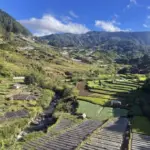
Chemical pesticide and fertilizer use has reportedly decreased the soil productivity in many farms in Benguet and some areas in the Cordillera vegetable belt.
An environmentalist and oriental medicine practitioner, Dr. Charles Cheng of the Filipino-Chinese Hospital here, in an earlier research, pointed out that chemical-laden runoff find its way into the Agno River, which traces its headwaters in the Mt. Data, passing through the Loo Valley and down to lowland rice fields and farms.
Saavedra, said, the amount of pesticide active ingredients has been drastically reduced from kilos per hectare in the early 90s to only grams per hectare at present.
As to the campaign to convert farms into organic and traditional farming, Gibson said, the concern now is to feed the growing population with less lands available for agriculture. # nordis.net