The Paradox of Jose Rizal
4 MIN READAs we commemorate the birth of Jose Rizal on June 19, the question arises once again: Why is a man who condemned the Philippine Revolution honored as the National Hero of the Philippines?



Over the week there were too valuable forums held in the city. One on bio-fuels and the other on traditional knowledge.
Both discussions stem from the growing global concern for sustaining nature, sustaining earth, sustaining the environment. In a way, these deal an alarm against the culture of consumerism.
The insights presented were relevant to what is happening everyday even in our little or not so big city, something they now call – traditional knowledge.
Traditional knowledge is a total of innovations and practices of indigenous and local communities around the world. It is the product of thousands of years of collective innovation by indigenous cultures. It is adapted to the local culture and environment and has been passed on orally from generation to generation. It therefore is collectively owned as a living gift from previous generations and comprises the birthright of future generations.
This includes, among others, language, songs, folklore, agricultural practices, health practices, natural resource management, handicrafts and cultural values.
Worldwide, there is a growing appreciation for the contributions of traditional knowledge that its recognition and the respect for its wisdom is even reflected in international instruments and covenants.
In the Philippines, the Indigenous Peoples Rights Act provides for the recognition and respect for the traditional knowledge of the indigenous peoples.
It is valuable not only to TK holders, in this case, the indigenous peoples (IPs), but also to society, in general. It comes in the forms of herbal medicine, preventive medicine, in the field of health.
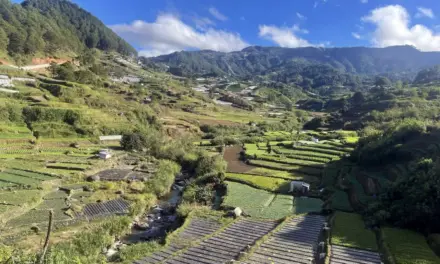
In agriculture: terrace farming, pest management, irrigation at high levels, fallow systems and the like.
For the environment: forest and watershed management, sustainable and environmentally-sound mining practices.
The respect and recognition of traditional knowledge, could have saved us from the use of fossil fuel, as when our forefathers harnessed geothermal energy to cook, solar power to dry edible things and preserve them for future use, or water to turn turbines to produce heat or process ore. Earth could have done away with the hole in the ionosphere and global warming. People would not have to compute and collect for carbon sequestration.
Maybe, just maybe, if we scientifically checked into our people’s traditional knowledge, we could have found a healthy and productive way, as people of this city, to even do away with our piling garbage with ease and no worry.
Our planet could only be a world we collectively create.#
4 MIN READAs we commemorate the birth of Jose Rizal on June 19, the question arises once again: Why is a man who condemned the Philippine Revolution honored as the National Hero of the Philippines?
3 MIN READBishop Alminaza stressed that removing mature trees will directly harm commuters, workers, and families already facing extreme urban heat and flooding.
2 MIN READMaaaring makuha ang kapangyarihan sa papel sa pamamagitan ng boto, ngunit ang kredibilidad sa merkado ay bunga ng mahabang rekord ng pamumuno, tamang pagpapasya, at kakayahang magbigay ng katatagan sa panahon ng kaguluhan.
4 MIN READIt was now a different weather we were about to begin; I have yet to feel the distance – the shower in our relationship – but what remained to me, to us, were the memories of the three beautiful weddings in May.
