



Professor urges public to take medium of instruction issue seriously
2 MIN READ
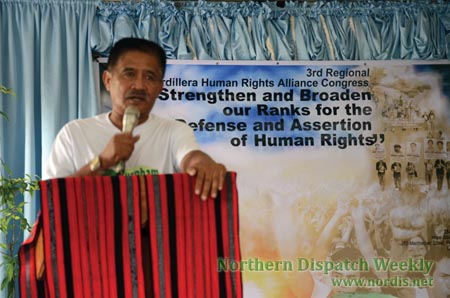
LUBUAGAN, Kalinga (Jan. 17) — Amid the argument whether to make English the standard language in schools, a commissioner from the Komisyon ng Wikang Pilipino (KWP) urged the people to take the issue seriously during a public for a on language development here.
Dr. Ricardo Nolasco, chairman of KWP and Linguistics Professor at the University of the Philippines (UP) said, “Aside from the first language spoken at home, we must learn to value our second language as the first step for our people to regain control of their environment and the exercise of our right to exist.”
Nolasco informed his audience that 2008 is declared by UNESCO as international year of language and will kick-off February 21 under the auspices of the KWP, the Linguistic Society of the Philippines and the Summer Institute of Linguistics (SIL).
Together with SIL officials,Nolasco was in Lubuagan to observe the First Language Component (FLC) program among Grades 1 to 3 in the district. “History will judge that this program will serve as an inspiration about language education in the entire Philippines,” he said.
Nolasco said most Filipinos only know of one language that is Pilipino and others are dialects. For Nolasco, other dialects spoken are also language by themselves. “This is a mutual intelligibility criteria that when speakers cannot understand one another when they speak different language although they speak one language or dialect of the same language,” he explains.
“One yardstick to distinguish language from dialect is the differences in grammar. Pilipino, Filipino and Tagalog share identical grammars,” Nolasco said adding the Philippines is the tenth most linguistically governed country in the world. KWP recorded some 170 languages and about 500 dialects.
“Tagalog, Pilipino and Filipino are equally intelligible variety and belong to one language,” Nolasco stressed. According to a team of educators, Filipino is a speech variety spoken in Metro Manila and other urban centers with different ethnic groups.
Nolasco said that English is a second language to most Filipinos. According to the 2006 Social Weather Station (SWS) survey, 7 out of 10 Filipinos read and understand English, 48% could write in English while 22% said they could speak English. About 22 million out of the country’s total population speak Filipino as their first language.
“This explains why Filipinos often switch to English and the by-product of it is a mixture of language used during conversations as in ‘Taglish’,” Dr. Nolasco said adding that 1,500 English words are borrowed and are already part of the Filipino language.
According to Nolasco, other groups would rather use English because it is everyonefs second language and is more prestigious. However, this does not mean giving up one’s first and second language.
Nolaso suggests the strict use of “P” in Pilipino and Philippines because they have only two official usage, which is the proper recognition of our nationality and country. # PIA-Kalinga