3 MIN READwww.nordis.net
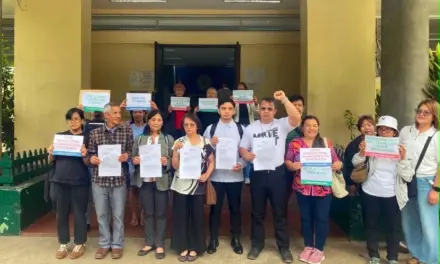
It has been two years since Pres. Benigno Aquino III (PNoy) took the nation’s helm and declared that everyone get in line behind him as he would lead the nation on the straight path (daang matuwid) to progress, or something like that. Come Monday afternoon, the President is again expected to deliver his state of the nation address before Congress. On the other hand, it is also expected that progressive and militant groups would deliver or give out their evaluation of the incumbent’s service to the nation in their traditional version of the ‘parliament of the streets’.
In this region that has a major population of indigenous peoples — who for many generations through the Spanish and American colonizations to the present western style of governance — have fought for the recognition and respect of their ancestral domains, ancestral lands, culture and chosen resource management.
It has been 25 years since Republic Act 8371 (Indigenous Peoples Rights Act) has been promulgated but still the indigenous peoples rights to their ancestral domains, ancestral land, and the right to self-determination continues to be mangled by powers that be in attempts to disenfranchise them. One such practice can be seen through the state agencies’ process of the peoples’ right to free, prior, informed consent where community people are purposely divided by covert misinformation and surreptitious monetary rewards so they may give up their fight to preserve their traditional sources of livelihood and natural resources.
The government’s implementation of the FPIC process is opposed to what PNoy said in his past SONA. And to quote PNoy, “Papaigtingin namin ang proseso ng konsultasyon at pag-uulat sa taumbayan. Sisikapin naming isakatuparan ang nakasaad sa ating Konstitusyon na kinikilala ang karapatan ng mamamayan na magkaroon ng kaalaman ukol sa mga pampublikong alintana.” (We will intensify the process of consultations. We will strive to implement the rights guaranteed in our Constitution, including the right of the people to information.)
Furthermore, when the people rallied to make their opinions heard about weaknesses in government policies, they are answered with threats from the state security forces. Cordillera and other indigenous peoples’ leaders are among the victims of extrajudicial killings who under PNoy’s watch has claimed 99 people (including two foreigners namely Fr. Fausto “Pops” Tentorio and Willem Geertman), political arrests and detention of more than 100, and the practice of torture and enforced disappearances continues.
Impunity still prevails as evidenced by the records that not a single soldier, police officer or government official has been tried nor convicted for human rights violations. Clear manifestations of PNoy’s government is the indifference to the pleas for justice. Human rights groups say PNoy’s administration has made no effort to search for and surface the victims of enforced disappearances like in the case of James Balao.
The struggle for the protection of the ancestral domain and resources has actually made the indigenous peoples domains, including vast resources of the Cordillera, last frontiers of natural resources that the nation can depend on to mitigate effects of the global phenomena of climate change, global warming or the greenhouse effect. Resources that the people can build on for food security and sustainable environments. Instead of conserving and developing these resources for his people, who by international standards are a very poor lot, Pnoy says: “We will cut red tape dramatically and implement stable economic policies. We will level the playing field for investors and make government an enabler, not a hindrance, to business.” He meant for the stronger foreign capitalist, also called the imperialist.
The PNoy government neglected to protect the advantage for his people but has been opening up more opportunities for foreign corporations and their local counterpart through its public-private partnership projects, often at the expense of the poor Filipino majority.
The Filipino people thought PNoy referred to the poor Filipino majority, indigenous peoples and Igorots included, when he said, “kayo ang boss ko.” But after two years in office on his own and with no more Gloria to blame, the broken promises and numbered accomplishments of this administration to alleviate poverty and improve social services to the Filipino, who do you think he was referring to as his boss? # nordis.net