




Drivers seek revision to smoke belching ordinance
4 MIN READ
By ALDWIN QUITASOL
www.nordis.net
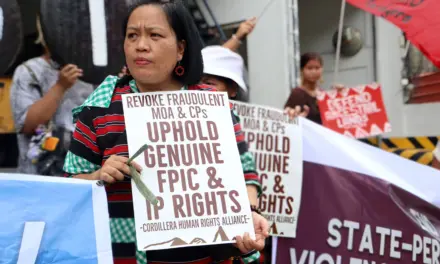
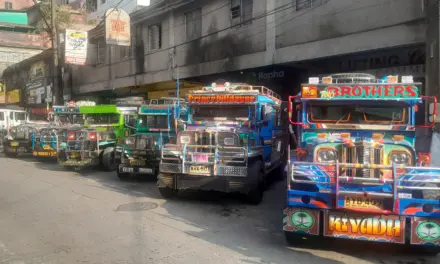
BAGUIO CITY — The Pagkakaisa ng mga Samahan ng Tsuper at Opereytor Nationwide-Metro Baguio chapter (Piston-MB) requested the city council to revise the implementation of the clean air ordinance here.
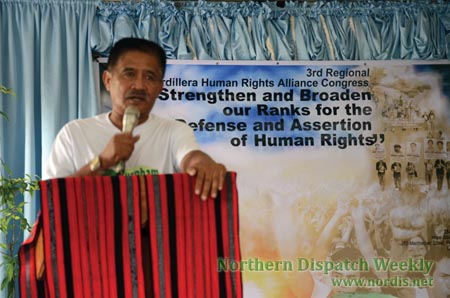
Piston-MB president Carlito Wayas clarified that they are not against the clean air act or the city clean air ordinance. He said that they are only questioning government’s passing on of its obligation to the said act by merely imposing several expensive fees on them.
Wayas said that while they as drivers and operators have responsibilities to maintain their vehicles and ensure they keep at a minimum or do not contribute to air pollution, the government has the greater job taking measures towards the realization of a clean and sound environment.
“Dakkel ti panagbigbig mi a ti Clean Air Act ket binukel para iti nadalus nga aglawlaw. Kangrunaan met nga interes dagiti drivers ti nadalus nga angin gapu ta isuda ti inaldaw nga adda kadaigiti kalkalsada nga exposed iti air pollution. Kinaagpaysona ket dagiti drivers ti kaadduan a biktima ti tuberculosis ken dadduma pay a sakit ti bara” (we know very well that the act was formulated to maintain a clean environment. Clean air to the best of the interests for the drivers because they are exposed everyday to air pollution on the streets. The truth is many drivers are victims of tuberculosis and other lung illnesses ). Wayas said the act is supposed to be beneficial to all.
According to Wayas, it is the obligation of the driver and the operator to check and make sure his vehicle clean and does not emit much carbon or smoke. But he said, it is not entirely the fault of the drivers or the operators that their vehicles necessarily emit smoke more than the limits stipulated in the Act.
He explained that the bad road conditions, surplus engines, substandard crude oil supply the country is buying and the poor transportation industry of the Philippines all contribute to the bad performance of vehicles.
“Lasong-lasong ti kalsada ditoy Baguio a pakadadaelan dagiti lugan ket segunda mano nga imported dagiti piyesa ta awan met ti industriya tayo nga agaramid ti kakasdiay. Santo pay lang ti maus-usar a nangina garuden a krudo ket narugit ken makasabidong gapu iti karga na a lead, sulfur, benzene ken dadduma pay nga impurities a mangmangted ti polusyon iti angin”
Baguio roads are not maintained and rough which cause more than normal wear and tear of our jeeps; and motor parts are second-hand imports because we do not have an industry to make such. And the substandard crude oil imported that we use aside from being expensive is dirty and poisonous because of the lead, sulfur, benzene content and other impurities that pollute the air.
He said that when a driver is apprehended by traffic officers for smoke belching, they are being fined P1,200.00 each. He added that they are paying other fees like the road users’ tax, the seat belt law, drug testing, law, franchise fees and other fines from minor traffic violations.
Wayas said that it seems like we are driving our jeeps just to pay for such fees and fines and not any more for our livelihood also. It seems that we are being fined for the inadequacies of government to provide good roads, negotiate fair trade or importation laws, a strong program for national industrialization, clean fuel supply and concrete support for the public transport system which is the main source of livelihood of a big number of workers in every town of the country.
On June 15, 2009, the Ordinance number 61 series of 2008 or Clean Air Ordinance of the city of Baguio sponsored by Councilor Erdolfo V. Balajadia in accordance to the Philippine Clean Air Act was enforced. Under the said ordinance, owners of smoke belching vehicles shall be confronted, penalized and their plate numbers will be withheld unless the offending vehicles would be tested, cleaned up and certified clean by the Roadside Inspection Testing and Monitoring Team (RITMT).
In their position paper, Piston asks the council that the polluter’s fee be waved because the drivers and small operators are already hard up earning for their families aside from paying other fees and fines. The group said that the obligation of the vehicle is to pay P50.00 testing fee and the strict implementation of the recommendations of RITMT.
The transport organization also stated that public utility vehicles that have passed the emission tests should be given a Validation Emission Certificate by the Clean Air Monitoring Unit (CAMU) valid for a year.
Wayas said that the emission standards should be lowered to suit second hand surplus engines that equips most of Baguio’s public utility jeepneys that have to run on sub standard imported crude oil. “Ti agdama nga 4.5 standard nga Carbon Monoxide emission nu naka idle ti lugan ket nakabasar iti European standard ken ti US, Singapore ken dadduma nga abante a pagilyan nga agususar ti barbaro a makina” ( the present 4.5 standard for Carbon Monoxide emission when the vehicle is on idle status is based on European standards and the US, Singapore and other developed countries using much newer engines), added Wayas.
Wayas also said that full throttle is not appropriate during testing. According to him, the required throttle for a jeep during emission tests is 900 engine revolution per minute (rpm) when idle and 3,500 rpm. In full throttle, it is equivalent to running at 120 kilometer per hour which is impossible on the kind of roads in Baguio.
“Isardeng ti panagtiliw ken roadside apprehensions aginggana a saan a nasolusyunan ti naaso a lugan” (There should be a stop to roadside apprehensions until the jeeps emitting heavy smoke are repaired), Piston statement read. The group said that the local government of Bagio has a big obligation to apprehend smoke belching vehicles but it has also an obligation not to compromise the small incomes of the drivers and small jeepney operators. # nordis.net