










Editorial: Genuine Freedom of Information Bill

January 27, 2013 in editorials, Featured, human rights, law, media, national, opinion

www.nordis.net

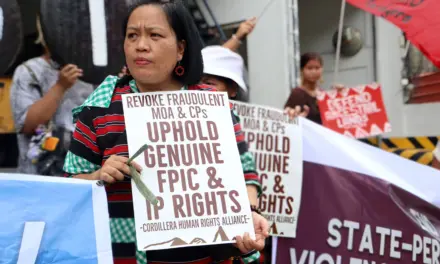
In the interest of good journalism and an informed community, the progress of the bill on Freedom of Information in congress is watched and covered by your community paper, especially on these last session days of the 15th Congress.

Last week just when the momentum for a final push for the bill was high, the principal sponsors of the bill withdrew their authorship after Malacaang entered its provisions. One of sponsors said, “It’s no longer Freedom of Information but Freedom of Exemption.”

The consolidated bill HB 6766 listed ten points of exemptions from public access among which include those pertaining to national security or defense, information that refers to the foreign affairs of the Republic of the Philippines, records of minutes during decision-making and policy-formulation, including the opinions and advice given then, are not to be disclosed. Drafts of resolution, order, memorandum or audit reports of any branch of government are also to be exempted from access.

The number and breadth of coverage of the said exemptions would, at a whim, restrict public access to information. Information that would limit the public’s capability to decide intelligently even on matters that has bearing on their day to day lives and perspectives as a community.

The already alarming situation of corruption both in government and in the ranks of the 4th estate remains a big threat to our democracy. These exemptions in an FOI bill is an articulation of politician’s wish to add restrictions over the peoples’ freedom to be informed and an attempt to legitimize violations of the masses’ basic human rights.

It is responsible and but right that the Makabayan bloc of progressive partylist groups in Congress withdraw their authorship from that mangled up copy of an FOI bill as much as it is but right for them to keep up their best to represent the people’s aspiration for a genuine Freedom of Information Bill. # nordis.net

Share

Free the new media, defy e-martial law

October 8, 2012 in Featured, human rights, media, national

www.nordis.net

As outrage against the Cybercrime Prevention Act of 2012 continues to snowball and create unprecedented unity and defiance among netizens, the Aquino administration has not backed down in its resolve to implement a clearly draconian measure designed to curtail our most basic civil liberties—the right to freedom of expression, of speech, and of the press.

As alternative media practitioners, filmmakers, bloggers, and artists who maximize the new media to bring to the public information, opinion and analysis, as well as works of art that serve to illuminate social conditions and present ideas for social change, we believe that the government’s repression of the medium is the message. With the Cybercrime Act, the government wants to ensure that no avenue for expression exists that is free from control by the rich and powerful elite.

The existing law on libel has long been used by powerful public figures mostly to harass and prosecute journalists for doing their job. Instead of decriminalizing libel as urged by international human rights and media institutions, the government has even increased penalties. Worse, it now considers each and every citizen who uses Information and Communications Technology (ICT) as potential criminals.

With the rise of new media, ordinary citizens have been given the extraordinary power to reach large audiences, a power that has previously been the monopoly of the government and corporate media. The new media has been the recourse of citizens who see, report, and interpret social realities that traditional institutions ignore, hide or obliterate. Citizens have long been marginalized from discourse on national issues through the agenda-setting powers of the government and corporate media. Through the new media, citizens have the opportunity to counter this marginalization—to give voice to the poor and oppressed, to gain an audience without the need for huge capitalization, to criticize freely and creatively.

We believe that the Cybercrime Law is primarily a tool that exploits the rise of the new media and the use of ICT to suppress dissent and spy on citizens. The way the law is being defended by those who crafted it, and especially by the President who signed it, reveals that they enjoy, and will use to their own interest, the immense powers that the Cybercrime Law has given the government, such as the ability to take down websites, undertake surveillance, and seize electronic data.

Abuses that will surely arise from such powers will undermine any gains that this law claims to have against “cybercrimes.” For instance, online child pornography and sex trafficking should be addressed by the strict implementation and strengthening of existing laws to reflect the developments in ICT. It is still debatable if hacking and cracking, spamming, online piracy, and cyberbullying are indeed crimes or if they can be covered under a single piece of legislation. What is clear is that these “cybercrimes” will not be addressed by a law makes expressing oneself online punishable by a jail term, or one that assumes that authorities can dip their hands into private electronic communication. In other words, a law that throws us back to the dark ages won’t protect our women and children, nor our personal identities and safety. On the contrary, it makes every citizen using ICT vulnerable to abuse by the biggest band of criminals: a government that is corrupt, loathes criticism (as can be judged by President Aquino’s reaction to the online phenomenon ‘Noynoying’), and uses all of its resources to crush dissent.

Even the US government—the footsteps of which the government only follows—did not confer such broad powers unto itself when it attempted, but failed, to pass its Stop Online Piracy Act and Protect Intellectual Property Act. However, the Cybercrime Law probably pleases the US government, as it strengthens their existing network of surveillance in the country, and boosts the counter-insurgency program Oplan Bayanihan. The said law also pleases local and foreign big businesses that operate in utter secrecy in this country, further shielding them from public accountability and oversight while penalizing those who use ICT to expose wrongdoing and abuses in the private and public sectors.

For e-martial law only reflects the de facto martial law already in place. Under Oplan Bayanihan, more than 100 citizens have been killed for their advocacies, forever silenced by bullets. More than 350 are imprisoned for their political beliefs. The Cybercrime Law makes it even easier to slap dissidents with trumped-up charges and send them to jail. After all, it now takes so little to be considered a cybercriminal.

Repression and lack of freedom is a daily reality for millions of Filipinos in the militarized countryside, violently demolished urban poor communities, and highly controlled workplaces and schools. Now it has become a daily reality as well for netizens who seek comfort in the freedom, however limited, of the new media.

As poverty, exploitation, and repression worsen, the duty to speak up and express ourselves through new media is more necessary than ever. As we begin to feel the grip of Aquino’s iron fist rule, it becomes more urgent to struggle to break free through actions both online and offline. E-martial law has been declared, and as those who fought the Marcos dictatorship taught us, the only way to end it is to start defying it.

Junk the Cybercrime Prevention Act of 2012!
Don’t criminalize criticism!
Defend our freedom of expression, speech and the press!
Resist tyranny!

Signatories as of 10/09/2012

Media & Audio-visual organizations:

Pinoy Weekly Online/ PinoyMedia Center
Bulatlat.com
Davao Today
Northern Dispatch Weekly
Burgos Media Center
Mayday Multimedia
Tudla Productions
Kodao Productions
Southern Tagalog Exposure
UPLB Zoomout

Artists & Filmmakers:

JL Burgos
King Catoy
Renan Ortiz
Katsch SJ Catoy
Adjani Arumpac
Kiri Dalena
RJ Mabilin
Bobby Balingit
Bonifacio P. Ilagan
Rogelio Ordoñez
Marie Boti
Ji-An Manalo, Artists for Change
Rommel Mendez, Panday Pira Professionals
Camille P. Sueno

Journalists & Media workers:

Melani Pinlac, Center for Media Freedom and Responsibility
Rupert Mangilit, National Union of Journalists of the Philippines
Nonoy Espina, NUJP Director
Jeffrey Tupas, TV5/interaksyon.com
Karlos Manlupig, Rappler.com/ Phil. Daily Inquirer
Alaysa Escandor, GMA
Edmalynne Remillan, GMA
Richard Gappi, Rizal News Online
Cong Corrales, Freelance
Ritchie Salgado, Freelance
Pigeon Lobien, Cordillera Today
Silvestre Quintos, Baguio Chronicle
Thom Picaña, GMA Baguio
Antonio Pekas, ZigZag Weekly
Gregory Taguiba, Mountain Province Exponent
Samuel Bautista, Sunstar Baguio
Alfred Dizon, Northern Philippine Times
Kathleen T. Okubo, Northern Dispatch Weekly
Fred Villareal, The Voice

Photojournalists:

Jes Aznar
Raymond Panaligan
Angelica Carballo
Buck Pago
Alex Felipe

Academe:

UP College of Mass Communications Dean Rolando Tolentino
Prof. Danilo Arao, UP Asst. Vice-President for Public Affairs
Former UP CMC Dean Luis V. Teodoro
Former UP Fine Arts Dean Leonilo Doloricon
Prof. Paul Grant, University of San Carlos Cebu

Artists organizations:

Pixel Offensive
Artists Arrest
Baluarte Artists Collective
Hiringgilya Collective
Habi Arts Collective

Bloggers:

Tonyo Cruz
Vencer Crisostomo
Kenneth Keng, Filipino Freethinkers

Student publications:

College Editors Guild of the Philippines
CEGP chapters in Central Luzon, Pangasinan, Tarlac, Cagayan, Baguio, Cordillera, La Union, Ilocos Sur, Bicol, Southern Tagalog, Palawan, Romblon, Samar, Tacloban, Bacolod, Cebu, Panay, Cagayan de Oro, Lanao, Bukidnon, Greater Cotabato, Davao & Socksargen

Solidaridad (UP publications alliance)
Philippine Collegian (UP Diliman)
Kalasag (UP Diliman)
The New Frontier (National College of Business and Arts)
Trinity Observer (Trinity University of Asia)
aSTIg (STI Araneta)
The Torch (Philippine Normal University)
Manila Collegian (UP Manila)
The Scholastican (St. Scholastica’s College)
EARIST Technozette (EARIST Manila)
Alyansa ng Kabataang Mamamahayag (PUP publications alliance)
The Catalyst (PUP Manila)
Business Torch (PUP Manila)
The Communicator (PUP Manila)
Paradigm (PUP Manila)
The Warden (Pamantasan ng Lungsod ng Muntinlupa)
The Philippine Artisan (TUP Taguig)
The Chronicler (PUP Taguig)
Atenews (Ateneo de Davao)
The Pillars (Ateneo de Naga)
UP Outcrop (University of the Philippines – Baguio)
Lorma Highlights (Lorma Colleges)
Technoscope (Pangasinan State University – Urdante)
The Pioneer (Palawan State University)
Tolentine Star (University of Negros Occidental – Recoletos)
The Angelite (Holy Angel University) # nordis.net

Share

Media hits Baac suspension

July 15, 2012 in Cordillera, media

By ARTHUR L. ALLAD-IW
www.nordis.net

BAGUIO CITY — The Baguio-Benguet chapter of the National Union of Journalists of the Philippines (NUJP) criticized Malacanang’s one month administrative suspension on Kalinga Governor Jocel Baac as a mere slap on the wrist.

“It gives a wrong signal which basically encourages attacks or threats against a journalist for anyway the perpetrator will just receive a slap on the wrist,” points out Kathleen T. Okubo, chairperson of the Baguio-Benguet NUJP.

“And the irony of it all, the questionable decision came out after a long year and a month since our compatriot was attacked inside his radio booth by the Governor,” she added.

It can be recalled that on June 7, 2011, Gov. Baac barged into the DZRK radio booth of Radyo ng Bayan, Tabuk while commentator Jerome Tabanganay was conducting his program. Baac hit Tabanganay on the mouth with a microphone he grabbed from the table.

Tabanganany filed an adminstrative complaint at the Office of the President on June 16, 2011.

After a year and a month, Executive Secretary Paquito Ochoa Jr., by the authority of the president, issued the decision which meted a penalty of one month suspension to Baac, as governor. He is also the chairman of the Cordillera Regional Development Council (RDC).

Issued on June 27, the decision, in its dispositive portion, states: “Wherefore, and as recommended by the DILG, respondent Governor Jocel Baac is hereby found guilty of conduct unbecoming of a Public Offcier and is meted the penalty of one (1) month suspension from office with stern warning that the commission of the same or similar acts in the future will be dealt with more severely.”

Tabanganay received the news warmly and claimed it as a triumph for press freedom against those who wanted to trample on it.

“Daytoy ket nabalitukan a regalo para kadagiti umili ti Kalinga (The decision is a valuable gift to the people of Kalinga),” added Tabanganay.

The national NUJP also criticized the Department of Justice for the sloppy treatment of the case. It said that Tuguegarao Assistant Regional State Prosecutor Ronnel Nicolas dismissed in December 2011 the case of grave threats and physical injuries filed against Baac as its (DOJ) resolution justified Baac’s action as “a defensive stance purposely to protect himself from further irresponsible commentarties.”

The Malacanang’s administrative decision and the DOJ resolution put together sends a wrong signal. “That if you do not like what a broadcaster is saying, just storm his station, grab whatever weapon you can find, hit him, threaten him,” the NUJP national statement pointed out.

“It does not matter if you are an elected offcial who swore to respect the law and protect the people. It does not matter if Kalinga is a province where human rights seem to be only on paper. It does not matter that in this country, government remains apathetic as the assassinations of journalists continue to make a mockery of our professed democracy,” the NUJP statement added.

The controversial Kalinga governor recently took his oath as a member of the Liberal Party, the party of Pres. Aquino, and was believed by media practitioners to be the reason for the light penalty imposed on the governor for the violation of the constitutionally-guaranteed Press Freedom. # nordis.net

Share

Robredo sitting on Gov. Baac’s admin case?

June 10, 2012 in Cordillera, media

By ARTHUR L. ALLAD-IW
www.nordis.net

BAGUIO CITY – A radio commentator alleged Secretary Jesse Robredo of Department of Interior and Local Government (DILG) is sitting on the administrative case he has filed against Kalinga Governor Jocel Baac, after the governor hit him inside the radio booth a year ago.

Jerome B. Tabanganay claimed that he was hit by Baac inside the DZRK-Radyo ng Bayan Tabuk while he was airing his regular program Agenda ng Bayan about 12:55 PM on June 7 last year.

He said that Baac barged into the radio announcer’s booth and grabbed the microphone and used the same (microphone) to hit Tabanganay on the face.

The attack resulted to the injuries on Tabanganay’s face and mouth. More injuries were believed to have been inflicted had not one of the four security aides of the governor restrained and brought the latter outside the booth.

“The incident has added to the growing frustration I experienced ever since that inicdent happened,” said Tabanganay in his letter to Pres. Benigno Aquino III which he sent this week.

Tabanganay is wondering why the administrative case he filed against Baac at the office of Robredo has no development at all, after a year since the incident happened.

“It is still a guessing game to me Mr. President and sometimes I could not do away from speculating that people at DILG especially Secretary (Jesse) Robredo as being silenced by the big money of Hon. Baac or is it because Governor Baac is inducted as member of the Liberal Party”, said Tabanganay, who also filed various cases against Gov. Baac, who is also the chairman of the Cordillera Redional Development Council (RDC).

Tabanganay continued: “If for the latter is the reason why he became a sacred cow, then I should be accorded the same respect and preference being a member of the Liberal Party long before Baac was inducted into its membership.”

The incident landed on the headlines of local and national media institutions which was believed to be the reason on why the government was forced to act initially on the case.

He is appealing to the president’s office to intervene and ferret out the truth why the incident is not given attention by Sec. Robredo. # nordis.net

Share

Kin of killed mediamen urge PNoy to stop media killings

June 4, 2012 in media, national, people

By ARTHUR L. ALLAD-IW
www.nordis.net

BAGUIO CITY – As the United Nations Human Rights Council scrutinizes the human rights record of the Philippine government, the families of killed journalists nationwide founded their organization on Sunday here in the city.

SARANGGOLA SUMMER CAMP. Children of killed journalists in the country participated in the annual summer camp, organized by the NUJP, as a way for these kids to recover from their nightmare of losing their parents whose job is for the realization of the contstitutional provision of the public right to know. Photo by Arthur L. Allad-iw

Called the Samahan ng mga Pamilya ng Pinaslang na Mamamahayag (SPPM), the new organization also urged President Noynoy Aquino to sincerely work to stop the killing of journalists and that justice be rendered to the victims of these media killings.

Elvie Sanchez, whose husband was killed in this city in 2005, said that their organization will move for the achievement of justice for the killed journalists.

Since 1986, there are 152 killed journalists in the country where only 10 of these are resolved or still undergoing court proceedings.

As most of the cases have no development, SPPM urged Aquino to order the review of the investigation and prosecution of media killing cases, said Sanchez.

“We also urge the President to work towards building an investigation and prosecution system that will protect the interest of the victims,” the SPPM added in their call which will be submitted to Pres. Aquino.

Mary Grace Morales, whose husband was among the journalists killed in the Maguindanao massacre and SPPM vice-chairperson for Mindanao, shared that their newly-founded organization is very important to the survivors of the killed journalists.

“We will closely monitor the cases of the killed journalists,” added Morales as she shared that even the cases filed against the Ampatuans in the Magunidanao massacre are delayed due to legal tactics and maneuvering by the defendants’ lawyers.

“Itigil na ang pagpatay sa mga mamamahayag…ang pagpatay sa mga media workers ay pagkitil sa malayang pamamahayag (The killings should be stopped…the killing of media workers are an attack against press freedom)”, added Morales whose killed husband was a correspondent of News Focus, a newspaper of general circulation in General Santos City.

As most of the killed journalists were the breadwinners of their families, the SPPM also urged the government to provide livelihood assistance to their families.

They also urged Aquino to avoid statements and actions that infringe on press freedom but instead build an enviroment where diversity of views are encouraged and those with contrary opinions should not be killed. They also urged Congress to pass the bill on Freedom of Information Act.

The families of the killed journalists were in the city for the Sarangola Summer Camp, a yearly activity organized by the National Union of Journalists of the Philippines (NUJP) which aims to help the children and their parents cope with their situation. NUJP also has education scholarship programs for the children of these killed journalists. # nordis.net

Share

Advocates urge Congress to decriminalize libel

May 6, 2012 in Baguio City, law, media

By ARTHUR L. ALLAD-IW
www.nordis.net

BAGUIO CITY — Practicing journalists, mass communication students, and advocates urged Philippine Congress to de-criminalize libel as it is directly inconsistent with the fundamental freedom of the press, which is enshrined in the Bill of Rights of the constitution.

“We demand that the Philippine Congress – both the Senate and the House of Representatives – immediately work to repeal the law on libel, to strike it off from the Criminal Statutes, as part of its duty to adopt legislation that would institutionalize the recognition and protection of the people’s human rights,” stated a position paper signed by the participants in a forum on the decriminalization of libel.

The forum held Friday at the Saint Louis University here was a part of the celebration of the World Press Freedom Day. Aside from SLU, the sponsors of the forum included the United States Embassy, National Union of Journalists of the Philippines, Baguio Correspondents and Broadcasters Club, and the Philippine Press Institute.

Speakers in the forum were Atty. Delmar Carino, Desiree Caluza, and Maan Cacdac.

The position stated that the Philippine criminal libel law exists allegedly to protect the private citizens from unwarranted damage to their reputation. Instead, it was used by the powers-that-be in muzzling the press, who are mainly doing their job to bring information to the public.

It added that a criminal case on libel has been an effective way of silencing media practitioners and a systemic hindrance to the people’s right to know.

“It is a legislation that failed to protect the innocent but instead shielded the guilty, our historical experience showed. It is a sword of Damocles hanging over the head of media practitioners which served as a threat in their oath as messengers of information,” added the position paper which the sponsors plan to submit to Congress.

The position cited that the United Nations Human Rights Council declared in 2011 that the Philippine criminal libel law is incompatible with Freedom of Expression provision of Article 19 of the International Covenant on Civil and Political Rights (ICCPR).

The UNHRC citation came as a result of a complaint brought to it by Alex Adonis, a Davao-based broadcaster, after he was convicted by a trial court and was imprisoned for two years, just merely for exercising his role as a messenger of public information.

The UNHRC pointed that the Philippines sanction of imprisonment for libel fails to meet the standard of necessity and reasonableness as imprisonment is unecessary, since there are other effective means available for the protection of the rights of others. It urged Philippines, a party to the Covenant, to consider the de-criminalization of libel.

The position paper pointed out that even if the criminal libel law will be repealed, a victim of a defamatory story can file for damage claims under the Civil Code. “So there is an assurance that an abuse of a media practitioner can have a legal sanction,” it added.

The participants also committed to work for the realization of democracy in the country, where the freedoms of the press and of expression will be realized.

Earlier on Wednesday, media practitioners in this city had a roundtable discussion at the Cafe by the Ruins where the de-criminalization of libel was also raised. # nordis.net

Share

College editor charged with libel posts bail

January 22, 2012 in Baguio City, Featured, media, youth

BY NORDIS
www.nordis.net

BAGUIO CITY — While relieved that the editor-in-chief of a local campus paper gained her temporary liberty after posting bail, campus journalists here claimed that the case of libel against her is an act of campus press freedom repression.

UPHOLD CAMPUS PRESS FREEDOM. The staff of the campus newspaper of the University of the Philippines Baguio, Outcrop trooped to the Baguio City Justice Hall, Friday, January 19 to post bail after a warrant of arrest wass issued against them for a libel case slapped against them by one of the teachers of the same university. Photo by Aldwin Quitasol

Supported by local student writers, Jesusa Paquibot, present editor of The Outcrop, the official student publication of the University of the Philippines Baguio (UPB), appeared on January 20 in the sala of Judge Edilberto Claravall at the RTC Branch 60 where she posted P6,000 bail for her temporary libery.

In a statement, staff members of Outcrop branded the libel case filed against their editor as an act constituting repression of press freedom which they resolved to fight until the case dismissal.

“This current fiasco of libel against our editor-in-chief is less of a pursuit of justice or dignity, but a blatant effort to repress the campus press’ freedom of expression,” the statement said. It is important to note that this case was already dismissed by the city prosecutor last year but only brought up once again after the professor filed a motion for reconsideration, it added.

The libel arouse from a lampoon article in a Yupiang Yupi section published in the Outcrop’s July issue last year. A satirical article, the item told of someone sensitive to noise.

A professor from the College of Arts and Communications, Department of Communications, filed a complaint of libel against Paquibot. The professor allegedly insisted that she was the one the lampoon piece referred to and that it blemished her name as a teacher and as a person.

To support her claim, she had the affidavits from a faculty member and a student to prove that they recognized her as the subject of the article identified as “Si Raulo Locaret” which has the same initials as her name.

In the lampoon article, it describes an incident when a professor shamed a photojournalist who was merely doing her duty as a campus journalist in front of her class during the July 19 State of the Youth Address activity at UPB.

In defending their editor, the Outcrop maintains that the accusations are purely speculative and the alleged allusions are coincidental.

“The article did not mention any real name and did not make any false claim about her or her family….but we deny the allegations that we fashioned the article with malevolent intentions to deface her name,” the Outcrop statement added.

Outcrop seeks public support in illuminating the case and also in upholding the campus press’ and the citizens’ right to expression.

“We see this tactic as yet another manifestation of the larger anti-student scheme which is prevalent in the repressive atmosphere of educational institutions,” it added.

Outcrop also appealed to the UPB administration to check on this case and ensure that the highest degree of fairness will be applied. “While we do not ask them to explicitly rally behind us in this fight, we urge them to check the conduct of its employees and be firm in chastising them if proven abusive of their positions,” it ended. # nordis.net

Share

Mindanao editor killed, first EJK in 2012

January 8, 2012 in human rights, media, national

By ALDWIN QUITASOL
www.nordis.net

BAGUIO CITY — An editor-in-chief and publisher of a daily tabloid “Tatak” in General Santos City in Southern Philippines is the first to be killed this year making it the tenth journalist under the administration of President Benigno Aquino III since assuming office in July 2010.

Two gunmen shot and killed 41 year old Christopher Guarin at around 10 p.m. in Barangay Lagao, Gen. Santos City. Guarin was with his wife and his 9-year old daughter on board his car when they were chased by the two killers riding on a motor cycle.

The gunmen shot Guarin while driving wounding him. Guarin, in an attempt to ensure his wife and daughter’s safety jumped out of his car. The killers were able to corner him in the side of the road then fired at him even as he is pleading for his life.

Guarin is the 150th journalist killed since the so-called democracy was restored by the 1986 EDSA uprising. “Tatak” manager Freddie Solinap said Guarin, who was also a radio commentator received numerous death threats prior to his death. The last text message he received read “If you show up at the station tonight we’re going to kill you”.

Guarin suffered five gunshot wounds to the body and one on his head. His wife suffered a superficial wound while his daughter was unscathed.

Guarin was also a former reporter of a local Bombo Radyo station and former station manager of DXBB Super Radyo General Santos.

In a statement, National Union of Journalists of the Philippines (NUJP) chairperson Nestor Burgos said that the killing of Guarin is a stark reminder that the culture of impunity in the country remains and is fostered by the glaring inaction, even apathy, by government. The killings belie Aquino’s pledge of justice and respect for rights in his quest for “tuwid na daan” (straight path).

Burgos added, Guarin joins the long list of murdered Filipino journalists, all of whom he said continue to cry out for genuine justice.

“We demand that Aquino unequivocally order all concerned agencies not just to arrest and ensure the conviction of Guarin’s killers, including the masterminds, but also to – on pain of sanctions – end all extra-judicial killings and ensure justice to the victims,” NUJP stated.

The International Federation of Journalists Asia-Pacific Director Jacqueline Park in a statement said the organization is deeply concerned that the year has begun with a continuation of and the increase of attacks on media professionals that they saw in the Philippines in 2011.

“We call upon President Benigno Aquino III to honour his pre-election commitment to defend press freedom in the Philippines, by seeing that all media workers’ murders are investigated and punished quickly, irrespective of potential motives” , read the statement.

Last year, the Philippines was placed third in the list of the Committee to Protect Journalist (CPJ) as the most dangerous place for journalists. The CPJ on its “impunity index” noted that the countries of Iraq, Somalia and the Philippines showed no improvements or even worsening records on the safety of the journalists.

He said that in 10 cases of journalists’ killings that have seen convictions, only those who pulled the trigger have been punished.”No one who ever gave the order to kill a journalist has been convicted,” added Burgos. # nordis.net

Share

Statements: Rebels in “media uniforms”

December 11, 2011 in Featured, media, national, opinion, statements

www.nordis.net

By NATIONAL UNION OF JOURNALISTS IN THE PHILIPPINES

Dec. 6, 2011

The National Union of Journalists of the Philippines is alarmed and seeks clarification about reports quoting the military as saying that some New People’s Army guerrillas who disarmed an Army intelligence team in Zamboanga Sibugay province over the weekend were wearing “media uniforms”  because of the danger such reports place journalists in, especially those reporting from conflict areas.

It would be helpful if the military would substantiate its claims by identifying the media outfits the rebels allegedly disguised themselves as workers of. Such claims, if unsubstantiated, would be irresponsible to say the least since they make all media outfits and all journalists within conflict areas immediate suspects and, worse, risk making them targets of security forces, as well as militias and other irregular units working with government.

If the reports are accurate, then what the NPA did is condemnable for the danger it places journalists in and we demand that they and ALL other armed groups stop disguising themselves as members of the media. Yes, all, since there have been many recorded instances of military and police personnel disguising themselves as journalists, especially during intelligence operations.

In line with this, we also call on all journalists to refuse all attempts by any of the parties to the armed conflicts in the country to use them as informants, intelligence agents or in any other capacity directly or indirectly connected to the conflicts. # nordis.net

Share

ILO, PPI, PMF call for entries on IP stories

October 30, 2011 in media

www.nordis.net

The Philippines has a rich and colorful tapestry of over 110 ethno-linguistic indigenous groups scattered across the archipelago. They comprise 10% to 15% of the population and are considered the most disadvantaged sector. They are generally located in ancestral territories and have high rates of unemployment, vulnerable employment and illiteracy. They are said to experience a great deal of discrimination, degradation and exploitation of their resources, and face challenges in land ownership.

Sadly, the situation of indigenous peoples (IPs) is under-reported or almost absent in Philippine media. When IPs are reported on, it is often about their cultural practices and idiosyncratic ways of living. They are always portrayed as victims of conflict or discrimination.

In response to the need to sustain substantial reportage and build on what has been started already, the International Labour Organization (ILO) Country Office for the Philippines, in partnership with Probe Media Foundation (PMF), will recognize outstanding published and broadcasted stories on indigenous peoples in print, photo essay, radio, television and online media that dealt with topics such as their rights, laws, struggles, dreams, aspirations and continuing efforts as beneficial citizens of this country.

The recognition program entitled “Pagkilala sa mga Natatanging Kuwentong Katutubo” (Recognition of Outstanding Stories on Indigenous Peoples), is the first of its kind in the country that will highlight excellence in reportage on indigenous peoples that portrays them not only as a marginalized sector or beneficiaries but as ‘partners in development’.  

This program largely focuses on success stories of indigenous communities or individuals —- how they were able to empower themselves amidst adversities and challenges as citizens of this country who usually take the back seat in the scheme of things or are lost in the stream of public consciousness.

Stories published or aired between August 2009 and August 2011 may be submitted to Probe Media Foundation not later than 12 midnight of November 15, 2011.

Recognition shall be given to the reporter, photographer, writer or producer whose story captured the essentials of reporting on indigenous peoples. Winners will be announced on December 12, 2011. (www.ilo.org/manila, katutubomedia@gmail.com and PPI as coordinating arm for print) # nordis.net

Share

Campus Journalism and Social Media

October 23, 2011 in Featured, international, media, youth

By IVAN LABAYNE
www.nordis.net

Part 2 (Click here for Part 1)

It is from the previously stated idea that advocacy campaigns like Move.ph can lend a big help to alternative journalists, particularly college publication members. It is important to stress the alternative framework from which the campus journalists are supposedly coming from.

In the traditional printed journalism, the campus publications uphold its alternativeness by offering a standpoint and analysis that is different from what the mainstream offers. Unlike its counterparts whose brand and practice of journalism is usually affected by commercial nature, student publications have no other interest to uphold but that of the students, commonly its sole publisher.

This alternativeness, aside from the tools of analysis and perspectives, is also exemplified by the selection of issues tackled in the campus paper. Campus papers should strive to cover issues that they deem most relevant and useful to the students and not just issues that are all-over the mainstream.

In that sense, the campus papers are at a marginalized position compared to mainstream. In the aspects of technical devices, scope of coverage and wideness of readership, campus publications are evidently not at par with the mainstream. This makes their impact and influence look limited and whatever alternative issue of analysis they forward will most likely be confined to the immediate community. Remarkably, Baguio is situated in the larger area of the Cordillera where a lot of indigenous people reside and where the issue of the marginalization of everything indigenous is very resounding.

Here, the campus publications in Baguio which is part of the Cordilleras, seem to be facing an extra-harder task. While as campus journalists they are already marginalized in the sense that they are not key players in the field of journalism, and as such, their voices will be heard in a smaller territory and impact and influence will be limited, they are likewise expected to reach the marginalized indigenous culture that is nourished in their immediate location – the Cordillera culture.

This scenario should only add a sense of imperative among student publications. And in the continual formations and contradictions of discourses in the society, the campus publication in the Cordillera must work double-time to make their voices hears – first, the voice of students who have their own plights and have their own perspectives on issues beyond the campus, and second, the voice of the indigenous Cordillera who is facing a subtle institutionalized marginalization as manifested by the issues they are confronting such as large-scale mining, displacement, cultural robbery, bastardization and commodification.

Tapping the social media for this purpose is a wise option.

Again, this is the flavor of the times. Next, while the most that campus publications can do in terms of printed journalism is a monthly issue (very few can comply to the strict demands of a weekly campus publication, one of them The Philippine Collegian), most of the mainstream publications are on a daily circulation. Aside from the present times being largely fascinated with the visual is its obsession with everything instant, quick, fast-paced. No wonder text messaging, instant foods, fast food chains, tweets among others are such hits. The same applies in journalism as well, we believe, and not just journalism, but the bigger and more complex activity of discursive formations and shaping (not to say, conditioning and controlling) mass opinion and behavior.

Campus journalism must maximize the emerging social media. They must be innovative and must strive to set trends in its playing within this trend in order to realize and continually extend its potentials not just in disseminating information but also offering alternative insights and perspectives to students and other audience alike. They must avail of the possibilities offered by social media and appropriate these in advancing their own issues and advocacies. For instance, in the nationally-coordinated strike held last Friday, the role social media played in informing, educating and eventually mobilizing cannot be discounted.

For one, the College Editor’s Guild of the Philippines launched strike lead in Facebook – a page solely dedicated to news releases, media advisories, news updates and other propaganda materials about the budget cut issue and the strike action. Also, a group named Kilos na Laban sa Budget Cuts was also created in the same social networking site where membership was open to all. In the group, similar updates, news releases, and press statements about the budget cut and the strike action were posted. Members were also encouraged to engage in discussions regarding the budget cut issue and education in general to make way for a more solidified and more united stand about the issue.

The recent Strike campaign against the budget cuts seems to foreshadow only the tip of the iceberg that is the potential of social media in inspiring a community to be more socially aware and politically involved. The campus publications now just need to figure out more ways to play around with this potential, devise more effective means for a more interactive and discursive feedback mechanism with members of the community and extend the audience that they can reach.

Once the people started biting on this trend, campus journalists should begin focusing on entertaining their initial involvement and push that involvement further. The ultimate goal, again, is to make them more informed about issues beyond the walls of the university and to prod them to a more concrete action. We have the tools now readily available, it is time to utilize them and ignite the numbed sensibilities and socio-political awareness and consciousness not just of the Baguio students and youth but the entire Baguio City. # nordis.net

Share

Lessons from the underground press of the martial law era

September 25, 2011 in columns, Featured, media, opinion

By PIO VERZOLA JR.
www.nordis.net

“Freedom of the press is guaranteed only to those who own one.”

That quote might be a startling, almost cynical take on the meaning of press freedom. But it was a respected American journalist, A.J. Liebling, who coined the now-famous aphorism. The terse statement was supposed to emphasize the harsh realities of capitalist ownership behind the noble expectation that journalists freely exercise their right, nay, fulfill their duty, to always provide the public with honest information and informed opinion.

In any case, little did Filipinos realize just how painfully that saying would apply to them on September 23, 1972. On that fateful Saturday morning, we all woke up to find no newspapers delivered to our doorsteps or sold on the sidewalks. We twiddled our radio sets (in my case, set just right beside my pillow, the better to hear the early morning news), asking with great puzzlement why they only emitted static noise on that morning.

Later in the day, we would know the reason for the total news blackout. Throughout the previous night, the big media presses and major radio-TV stations had been locked up, put under heavy armed guard, and later placed under new management controlled by Marcos and his martial law coterie.

Government-controlled print and broadcast outlets, such as the infamous Daily Express broadsheet and RPN-9 were allowed to continue. These Marcos mouthpieces enjoyed near-absolute media monopoly, spewing out the official propaganda line of the dictatorship while censoring the rest of the news. For most Filipinos, that was the first taste of martial law on its very first day: the lack of a free press.

Click here to continue

Share

Kalinga gov explains media harassment

June 12, 2011 in Cordillera, Featured, human rights, media

By ALMA B. SINUMLAG
www.nordis.net

BAGUIO CITY – “He had been accidentally hit when I got from behind the microphone for the purpose of stopping him for I could no longer endure his personal attacks upon my person and the Kapehan body”.

This was the explanation of governor Jocel Baac of the province of Kalinga in his statement regarding a video clip showing his alleged harassment of Jerome Tabanganay, a radio announcer in the said province.

The statement was read to the media here organized for a press briefing by Atty. Kristian Wandag, the provincial legal officer (PLO).

It can be recalled that on June 7, an incident involving the governor and Tabanganay circulated through a video footage uploaded on Youtube.

The governor denied that he intentionally hit Tabanganay.

He explained that on June 7, he went to the radio station (Radyo ng Bayan) to talk to Tabanganay regarding his irresponsible and unfair way of handling his program and to tell him to be more balanced in his reporting.

He said, there are a lot of complaints against Tabanganay with regards to his program, “Agenda ng Bayan” but it seems the station manager has not acted on this.

The statement added that the broadcaster does not verify first if the text messages sent to him for his program before reading it on-air. He does not even get the side of the text messages’ subject.

Baac said, when he rushed the radio booth where Tabanganay was still on air, the latter arrogantly said “apay?”(why) without going off air. He (Baac) then took the microphone so that their conversation will not be aired live.

However, the announcer grabbed another microphone and kept on talking. Baac then took the said microphone from behind, which he said, “accidentally hit Tabanganay’s lips.”

The statement further explained that the governor admitted that his presence in the radio station may have caused inconvenience to the people who were present during the incident. However, he stated that his intention was for the interest of the province.

Moreover, aside from a lot of complaints against Tabanganay, the governor said Tabanganay and the radio station does not serve their purpose of being a government entity.

According to him, the station should be the local government unit’s (LGU’s) partner in promoting the programs of the province specially its tourism program.

Furthermore, the governor alleges, that last month, Tabanganay on air in his program was convincing the New Peoples Army (NPA) to access the station’s cellphones so that they could talk on the apprehension of alleged ‘jueteng cobradors’.

“This acknowledges the authority of the NPA and it will mislead our people to think that the NPA are better than the elements of the government. This is inciting to sedition,”the governor said thru the read statement.

Wandag, after reading the governor’s statement confirmed to media that the governor is preparing to file legal cases, one of which is libel against Tabanganay.

On the other hand, Malou Laxamana-Pascual of RPN 9 said, “The governor should have exhausted all other efforts to talk to him rather than barging into the radio booth”. She added that there are processes to be followed if he wanted to clarify issues with the reporter.

No categorical statements were issued whether the governor’s action was a conduct unbecoming of a public servant.

Members of media informed Wandag and his companions that the National Press Club (NPC) has already filed physical injury charges against the governor.# nordis.net

Share

La Trinidad dads post bail

April 24, 2011 in Cordillera, Featured, media

By ALMA B. SINUMLAG
www.nordis.net

LA TRINIDAD, Benguet, (April 19) — Members of the Sangguniang Bayan (SB) of this town who are facing charges of graft and corrupt practices posted bail today at Branch 62 of the Regional Trial Court (RTC) here.

Respondents Romeo Salda, Jim Botiwey. Henry Kipas, Arthur Shontogan, Roderick Awingan, Horacio Ramos JR., Estrella Adeban, Francis Lee, Von Ryan Tauli, and Robert Namoro paid P15,000 each, a total of P150,000.

Vice Mayor Salda said in an interview that they did not wait for the warrant of arrest to arrive.

They voluntarily went to the RTC and requested the bail bond be lowered which was approved. Originally he said, the bail bond was P30,000 each but it was decreased by 50%.

Salda added that the money they used for the bail came from their personal funds. “The receipt were given individually,” he said.

This writer asked his opinion regarding the case, he said “Anyway, it is already in court, we will just wait for its deliberation.”

On March 31, the Provincial Prosecutor’s Office found probable cause on the graft and corrupt practices case filed by Jimmy Laking, a writer and columnist of a regional paper against them.

Laking on December 21 last year was declared persona non grata in the SB hall through a resolution unanimously approved on 1st reading by the council. This was because of the allegation of the SB that Laking “violated media ethics and standards.”

Laking, according to them misquoted members of the council on several occasions. Moreover, they said, “propagated misleading information and mistrust, discord and chaos among the members of he council and the general public because of his repeated infidelity to his profession”.

Moreover, the said resolution was published at the expense of the SB in the Baguio Midland Courier.

Prosecutor’s office then considered Laking’s claims that “the actions of the SB has accused, convicted and sentenced him to be persona non grata with out even informing him’. Moreover, he asserts that his reputation, record, goodwill and the name as a journalist and a resident of La Trinidad were destroyed”. # nordis.net

Share

News photog files for illegal detention raps vs PNP auxilliaries

February 27, 2011 in Baguio City, human rights, media

www.nordis.net

By NPT

BAGUIO CITY – Mayor Mauricio Domogan has ordered an investigation Thursday (Feb. 24) on charges of a news photographer who filed a complaint for illegal arrest and detention, harassment, robbery and intimidation against two police auxiliary members.

During his weekly media “Ugnayan,” Domogan tasked Policarpio  Cambod, executive 3 of the mayor’s office to make inquiries so he could act on the matter.    

This, after Peter Oliva Valencia, 45, a news photographer of the weekly newspaper Northern Philippine Times (NPT) filed Thursday with the National Bureau of Investigation (NBI) a complaint on the incident, which he said, demeaned and humiliated him personally and his status as a member of the media.

Identified as respondents in the complaint were police auxiliary members Honorato S. Gallegos Jr. and Julius Albano whom Valencia alleged, accosted him in front of Cuevas Bakery along 1st Kayang St. here about 3:30 PM on February 21.

The respondents were reportedly with around 10 members of the Anti-Peddling Task Force who were confiscating goods of vendors in the area when they handcuffed him.

Valencia said he was about to take a photograph of Gallegos as he was about to load a confiscated pot full of cooked food at the back of a police mobile car with a sticker printed with H7 on its side when Gallegos put the pot inside and tried to grab Valencia’s camera.

“I resisted and grappled for the camera and was able to put it in its case strapped to my waist,” Valencia said.

At this point, Albano demanded that Valencia show his press card to him.

Albano reportedly took shots of the press card including Valencia while Gallegos shouted, “Walang media media sa amin.”

Suddenly, Valencia said, Albano and Gallegos held and handcuffed him. This made his leather notebook which had a fastener fall to the ground. When the two later returned the notebook, Valencia said the P500 he was supposed to pay for his electricity bill was lacking.  

Valencia reportedly asked John Delmas, head of the traffic management division, who was standing nearby why he was being handcuffed, but he did not act or say anything.

While people looked, the two respondents reportedly forcibly held Valencia and marched him to police Station 7, about 50 meters away.

“I was so humiliated while being forcibly taken to the police station in handcuffs like I was a criminal,” Valencia said.

At the police station, Gallegos reportedly forced Valencia inside a detention cell and locked him inside for at least two hours.

This, while about five unidentified police officers reportedly looked and did nothing.

Inside, Valencia texted Rudy Garcia,  columnist of the said paper about his predicament. Garcia in turn texted Alfred Dizon, their publisher about the matter.

Dizon went to the police station and asked SPO1 Reynaldo Badua why Valencia could not be released.

Badua said he had to ask first his bosses who were having a meeting that time with City Police Chief Senior Supt. David Lacdan in improving police work.  

Dizon then went to the office of City Prosecutor Gloria Agunos who phoned the police to release Valencia under the custody of Dizon.

Valencia was released later and accompanied by Dizon and Garcia the next day, filed the above cited complaints with the NBI.

He said, at press time, charges were not filed against him by the respondents for taking photographs or any purported violation.

He said vendors and onlookers who saw the incident were willing to testify against the respondents.

He added that the respondents could have had an axe to grind against him for some articles printed by the NPT on abuses of members of the market task force. # nordis.net

Share

Journalist ask media to police ranks

February 20, 2011 in media

By ADELA DEYAEN WAYAS
www.nordis.net

BAGUIO CITY – Media is either being under the gun or under the lens – Ed Lingao of the Philippine Center of Investigative Journalism differentiates these two worlds where media in this country can be found.

Talking about Shooting the Messenger: the curious case of press freedom in the Philippines, Ed Lingao discussed two worlds of media: Media under the gun and Media under the lens.

In the first world, Lingao emphasized the culture of impunity and said in the country nobody gets punished. Take it as an example, he said, Erap was convicted and jailed in his mansion but then granted clemency and Gloria enjoying her 9 years of power as president and now as congresswoman.

“ All politics is local,” he quoted. Lingao explained that most of the media killed are from the local and most of them are linked to local politicians. He said while there is a weak national governance, there is as well strong local personalities.

The National Union of Journalists of the Philippines has counted 140 medial killings since 1986. “W e have a lot of media killings and we want accountability from the government but we also want accountability from this industry,” said Lingao.

The other world where media can be found is under the lens. In his presentation Lingao subdivided this into two, the national media and the community media.

Ratings driven is one of the survival of media specially on the national, according to Lingao. He said the line “this is what the public wants” has been a line of reason by media for their news which tends to focus on entertainment and crime.

Lingao added the public viewers have always been the reason for the media for the kind of news, any show or production it airs. “this became a norm already,” he said.

Packaging versus content has also been a difficulty in the media. Lingao said, presentation of oneself (reporter) is what matters over the content of the news it implies. He asked, what values can it deliver to the viewer if presentation is the dominating content?

Lingao related bombast and tabloidish news over the media. The opening billboards of the different stations, he said, is a very good example of this. In his presentation he implied reporters and anchors projecting poise and pomposity making the newscast entertaining. Here he pointed out “ news has a mixture of entertainment.”

Community media on the other hand faces the matter of ethics and economics. He said there are some in the local media are who are not really acting as media. He explained that in the local media the issue of low pay-overwork system is really visible. Reporters become sales executives, he said, or the other way around.

Over the years, he said media has matured but has commercialized. Media he added learned to probe, unfortunately commercialized, because politics has not matured and even regressed which often resulted to conflict.

“Journalists are not safe already to the people they cover,” he claimed. Even in these two sides of the coin, Lingao said nothing justifies the media or the reporter. He said they want to put everybody accountable for this however it might increase the danger.

In conclusion, Lingao said, there is a need for media to police its ranks. # nordis.net

Share

Journalist sues La Trinidad dads

February 13, 2011 in Cordillera, Featured, media

By KIMBERLIE OLMAYA NGABIT-QUITASOL
www.nordis.net

LA TRINIDAD, Benguet — A journalist sued the members of the La Trinidad Municipal council for graft and corruption after unanimously passing a resolution barring the journalist from a public domain.

Jimmy Laking, a reporter and columnist of a local regional paper covering the Benguet beat filed a graft and corruption complaint against the vice mayor and all councilors for enacting a resolution on December 21, 2010 which declared him persona non grata in the Sangguniang Bayan of La Trinidad. The complaint was filed February 10 at the Benguet Provincial Prosecutor.

In his complaint, Laking said “that the enactment and passage of said resolution by the respondents is an abusive and oppressive use and exercise of government power and authority.”

In his complaint, he added that under the Anti-Graft and Corrupt Practices Act, among the corrupt practices of public officers include “causing any undue injury to any party,….in the discharge of his official, administrative functions through manifest partiality, evident bad faith or gross inexcusable negligence.”

Laking claimed in his complaint that he was subjected to public ridicule causing undue injury when the SB used the resolution in their paid ad in the same regional paper.

“That the profession of the herein complainant has been greatly affected, compromised and prejudiced by unfounded and baseless act of the respondents in declaring him persona non grata and thus destroying his reputation, record, good will and name as a journalist and resident of La Trinidad, Benguet,” it added.

Respondents include La Trinidad Vice Mayor Romeo K. Salda and Councilors Jim G. Botiwey, Henry M. Kipas, Arthur M. Shontogan, Frederick C. Awingan, Horacio A. Ramos Jr., Estrella B. Adeban, Francis A. Lee, Von Ryan T. Tauli and Robert M. Namoro.

Earlier on February 8, media practitioners of Baguio-Benguet trooped to the Municipal council to ask for the recall of the council resolution declaring the journalist persona non grata in the Sangguniang Bayan halls.

Later that day, the Municipal council unanimously signed a resolution lifting the persona non grata on the condition that Laking dialogues with them.

Baguio Correspondents and Broadcasters Club (BCBC) outgoing President Jun Villanueva said they staged the silent protest to reiterate the recall of the persona non grata resolution against Jaime “Jimmy” Laking. He said the council should recall the resolution before conducting a dialogue to thresh out their allegations against Laking.

Villanueva iterated that declaring a journalist persona non grata from covering a public office is an attack against press freedom. He added that the BCBC and other media groups are willing to conduct seminars for the council to have a better understanding of the media practice.

“Our goal in covering public offices is to promote public accountability and transparency,” he pointed out.

National Union of Journalists of the Philippines (NUJP) Vice Chairperson Art Allad-iw asserted that the council’s resolution violates the constitutional right to freedoms of expression and of the press enshrined in Article III of the Bill of Rights.

Allad-iw stressed that the council should recall the resolution against Laking before the dialogue starts.

Article III, Section 4 of the 1987 Constitution states that “No law shall be passed abridging the freedom of speech, of expression, or of the press, or the right of the people peaceably to assemble and petition the government for redress of grievances.”

Allad-iw urged the members of the council to lift their declaration after SB member Henry Kipas and SB member Jim Botiwey admitted that they are still gathering facts to support their move.

“It is putting the cart before the horse,” he declared while he said he recognized their (Council) legislative prerogatives to pass legislations, but such exercise must not also transgress the rights of the journalists and must have substantial facts before declaring a person as non grata.

Larry Madarang of the Benguet Press Corps declared support the NUJPs claim that the resolution undermines the rights of Laking as a journalist and has brought a chilling effect to local media practitioners.

NUJP Chairperson Kathleen Okubo questioned the municipal council for using the mandate of the people to bar a journalist from covering a public domain. She explained that the council is a public office and that they should be representing the people’s position.

Okubo stressed that the resolution against Laking is considered a collective legislative effort but their explanations show that such arises from their personal tirade against Laking. She added that good governance requires transparency and the media’s role is to inform the public.

Councilor Jim Botiwey, proponent of the said ordinance, said the resolution was not directed against the press as a profession but a personal expression of sentiments against several articles of Laking.

It can be recalled that the BCBC and the Benguet Press Corpse (BPC) wrote the council asking for the recall of the resolution. The council in a letter response called for a dialogue and demanded that Laking stops writing about the council. The municipal council on January 25 turned down the request of Baguio and Benguet media organizations to lift the said resolution.

A letter from the SB addressed to BCBC and BPC stated that lifting the declaration will be misplaced. This according to them is because of prevailing instances that include the press releases of Laking assailing the action of the council. # nordis.net

Share

Media groups ask recall of journalist ban

January 30, 2011 in Cordillera, Featured, media

By ALMA B. SINUMLAG
www.nordis.net

LA TRINIDAD, Benguet — Majority of media practitioners here stand firm on their call for La Trinidad municipal council to recall its resolution declaring a journalist persona non grata in the Sangguniang Bayan (SB) halls.

Art Allad-iw, vice chairperson of the National Union of Journalist in the Philippines (NUJP) Baguio-Benguet chapter said in an interview that they condemn the act of the council undermining the constitutional right of Jimmy Laking of Baguio Midland Courier in the exercise of his freedom of expression. “If Laking really committed a violation in the journalist code of ethics, why did they not file a case against him in court?,” he said. He said further that the council did not even conduct a public hearing before the issuance of the said resolution.

Allad-iw even called the council onion skinned. He said it is a normal thing for public officials to hear negative reactions from the people. If the council will not recall the resolution, NUJP he said will bring out the issue to the national and to the international level.

Baguio Correspondents and Braodcasters Club (BCBC) President Jun Villanueva in an interview said the SB resolution is clearly a supression of press freedom. He added that should the media keep quiet about Jimmy Laking’s case, it might set a precedent for other offices to ban media people if they do not like the reportage.

Villanueva shared that the SB wants the reporter to stop writing about the issue in his column for them to recall the resolution. He pointed out that there is a difference between news reportage and column writing. He stressed that unlike news where the reporter merely states the facts, a column contains the opinion of the writer.

“The SB needs to have a seminar to study and learn the different aspects of the media practice so that they will understand our work and that their future actions would be guided,” Villanueva said.

He further said that the media are still open for dialogue and they still hope for the proper solution of the issue.

The Baguio media is contemplating to stage protest actions regarding the matter.

On the other hand, Atty Delmar Carino, chairman of Benguet Press Corps (BPC) feel sad that the SB missed the whole point of their letter. He iterated that declaring Laking persona non grata is not a solution to their allegations of his violations to the code of ethics.

It can be recalled that the municipal council here on January 25 turned down the request of Baguio and Benguet media organizations to lift their resolution declaring Jimmy Laking a persona non grata in the SB office.

A letter from the SB addressed to BCBC and BPC stated that lifting the declaration will be misplaced. This according to them is because of prevailing instances that include the press releases of Laking assailing the action of the council.

Meanwhile, the council clarified that they are not shutting the doors of the SB office to Laking. They were accordingly merely expressing their collective sentiment that the said reporter is not welcome in their office. Also, the council in their letter questioned the media practitioners if they adhere to ethical standards in the exercise of their profession.

It can also be recalled that on December 21 last year, La Trininidad (LT) SB through a resolution unanimously approved by the members of the council declared Laking as persona non grata in their office. The action of the SB was because of several reasons like Laking’s negative tirades against the council in his numerous news and opinions published in the aforementioned newspaper anchored by his personal interests. Laking according to the council has violated journalist ethics. They also requested BCBC and BPC to probe on the council’s allegation and issue sanctions against him.

It can be further recalled that two days before the issuance of the resolution, Laking wrote regarding the controversial P268 million Jarco mall deal in his column. It was stated there that the pro-mall dominated council is wracking its head on how to overcome the obstacles to pave way for the mall’s realization. This and more issues were the reason of the persona non grata according to the council.

BPC and BCBC offered to broker a dialogue between the council and Laking to address the issue which the council accepted. However, there was no reply coming from the reporter if he wanted the said dialogue or not. Thus the media organizations cannot push through with it.

Moreover, the said media organizations on January 24 through a letter addressed to Vice mayor Romeo Salda requested the council to reconsider and recall the above mentioned resolution . The request was anchored by the organizations belief that the declaration was improper and is a violation to press freedom.

“Declaring a journalist persona non grata would pose serious repercussions on the right of access to public information guaranteed by the constitution,” the letter read. It was also stated that the declaration alone will hamper the people’s right to information imbued with public interest. This is because Laking has been declared unwelcome to the coverage of council meetings.

Furthermore, BCBC and BPC added that they believe there are available remedies that the council can avail of in order to address their allegations against Laking and that declaring the reporter persona non grata is not a wise decision. # nordis.net

Share

Cordi media demands justice, observes Ampatuan massacre anniversary

November 28, 2010 in Baguio City, Featured, media

By ADELA DEYAEN WAYAS
www.nordis.net

BAGUIO CITY — “Justice!” This was the call of the National Union of Journalists in the Philippines (NUJP) Baguio-Benguet Chapter as they join to commemorate the 1st year of the Ampatuan massacre, last November 23, Tuesday, at the Burnham Lake here.

REMEMBRANCE. Members of the local mass media together with other concerned citizens lit candles in Burnham Park to commemorate the 1st year anniversary of the Ampatuan massacre. Photo by Brenda S. Dacpano/nordis.net

One year ago, a massacre in Sitio Masalay, Barangay Salman, Ampatuan, Maguindanao shocked the whole country and the international community when 57 victims were found dead on a hill,31 of whom were journalists, with the body of Reynaldo “Bebot” Momay still to be found.

The NUJP here lit 58 candles which they floated on the lake and offered prayers for the souls of the victims of the massacre.

The media group stressed that the Ampatuan massacre is a tragic reminder that the culture of impunity has long existed in our country. The group added that the bloodbath will not stop until government brings perpetrators to justice.

“Let the Ampatuan massacre serve as a lesson to the warlords and political kingpin. We will never allow the gruesome killings to happen again,” the NUJP statement further read.

After one year, perpetrators of the massacre have yet to be punished by the state while witnesses who have surface are being killed, involuntary disappeared or have been receiving death threats.

BCBC President BOMBO Jun Villanueva said “Sana naman ay mabigyan din ng pansin na maexpidite at pabilisin ang paglilitis para mabigyan ng hustisya ang ating mga kasama,” (I hope that the hearing process of the case be expedited so that the victims get the justice they deserve). He added that media practitioners today should be vigilant because of the “chicken-like killing” of journalists.

In his statement, Villanueva said that for every journalist being killed, a hundred will be born to continue serving and informing the people.

Perry Mendoza of the ACT-Cordillera said the situation of the employees and teachers in the country is very much the same as the situation of media people. He said the culture of impunity also endangers the lives of employees and teachers in the country.

“Tayo ay magpapatuloy na imulat ang mamamayan para labanan ang tumitinding paglabag sa ating demokratikong karapatan,” (We are going to continue to educate the people from injustices and other forms of violation of our democratic rights) Mendoza added.

While demanding that the past administration of Gloria Macapagal Arroyo be held accountable for various hideous crimes and injustices done against the people, the local CEGP chapter is now challenging the present administration to pursue justice along his “daang matuwid”. They claim that without justice PNoy’s promise of good governance through his “daang matuwid” will never happen.

CEGP also condemned PNoy’s silence on the massacre. “If PNoy is consistent in pursuing its daang matuwid, then he should have been more active in pursuing those responsible for the extrajudicial killings and other human rights violations,” the campus journalist’s group added.

The various sectors and the organizations here condemn the slow process and little progress in the Ampatuan massacre since the past administration and even after five months of PNoy in the presidential seat.

Different sectors in the city also joined and supported the call for justice for the victims of the Ampatuan massacre. Members of the Baguio Correspondents and Broadcasters Club (BCBC), National Union of Peoples Lawyers (NUPL), Innabuyog Gabriela, College Editors Guild of the Philippines (CEGP) Baguio-Benguet Chapter, Alliance of Concerned Teachers (ACT) Cordillera and ACT Teachers Partylist, students and other media practitioners were at the commemorative activity. # nordis.net

Share

Statements: Call for justice, prosecution of the masterminds behind the Maguindanao massacre

November 21, 2010 in media, opinion, statements

www.nordis.net

By COLLEGE EDITORS GUILD OF THE PHILIPPINES – BAGUIO-BENGUET CHAPTER

Our people truly have this incurable tendency to forget.

The horrendous massacre that killed 57 people, 32 of them journalists, last year in Mindanao is nearing its first year mark. Nearly a year after its occurrence, justice for the victims remain out of hand. This scenario is already verging on being an utter farce as the evidences that can help in resolving the case have already been substantial. For one, an Ampatuan residence has been discovered to be a massive storage of high-class ammunitions and other weapons. This discovery is already very telling. What should be the viable reason for the existence of such number of complex weapons in the house of a person? The invisible link is drawn by the implication that the Ampatuans’ “fetish” over complicated weapons answers why he is the primary suspect in the case. To put it more bluntly, it confirms the possibility that he is the mastermind behind the heinous perpetration.

Lest we have forgotten as well, Ishmael Mangudadatu, the biggest personality in that group of people involved in the brutal carnage last year, was about to file his certificate of candidacy for the 2010 elections when the massacre occured. After a long time, someone has dared to challenge the rule of the Ampatuans in Datu Unsay, Maguindanao. However, Mangudadatu, along with his entourage that includes a handful of media practitioners, has fall prey to the voracious predator that is electoral violence and the thirst for power.

As this incident emphasizes the condition of mainstream journalism in the country, a condition marked by repression and stifled expression, we are again reminded that their plight is not isolated from the plight of campus journalists in the country. Campus press freedom violations are still marked inside Cordillera campuses. Funds are being withheld, articles are being censored, students’ opinions and views are being filtered, and progressive student journalists are being terrorized or harassed. All of these actions by the school administration are not different from what the government is doing to the mainstream journalists. These are all in line with their intention to keep the media men from exposing the things that are actually happening in the society and which the people must know about. With the people not informed or misinformed, they will also be kept from knowing what their government is doing and what is actually happening in the country.

As we recall the nightmare of journalistic practice in the Philippines that is the Maguindanao massacre, the College Editor’s Guild of the Philippines is reiterating its condemnation of the notorious incident. More importantly, we are even firmer in calling for the justice for all of the slain individuals and their bereft loved ones.

We are challenging and calling on the present administration of Benigno Aquino III to make the Ampatuans pay for the violent crime they have committed not only against the 57 people mercilessly murdered but also to the entire Filipino people. The seeds of violence they have sown only prove that those who are in power can thoughtlessly resort to violent means just to sustain their hold of power. This system which is characterized by

And lastly, unless social justice is founded, this culture of impunity and terror will continue. # nordis.net

Share