










Strong tuition regulation law urgently needed — Kabataan

April 7, 2013 in education, Featured, national

By KABATAAN (PR)

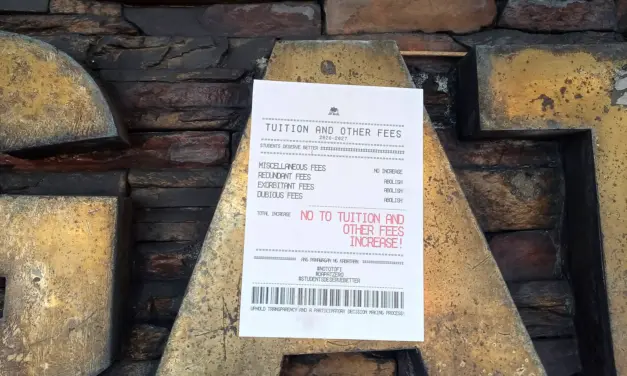
QUEZON CITY — With over 400 colleges and universities submitting tuition hike proposals to the Commission on Higher Education (CHED) for school year 2013-2014, Kabataan Partylist Rep. Raymond Palatino reiterated the need for a “strong tuition regulation law” that would give government agencies such as CHED “muscle and teeth” to control tuition and other fees in over 2,000 higher education institutions nationwide.

“The government’s current tuition regulation policy – CHED Memorandum Order 3 – is a toothless paper tiger. While the said policy lays down guidelines for proper consultations regarding fee increases, CHED has no proper mechanism to monitor compliance,” Palatino said. Read the rest of this entry →

Share

More women than men earn degrees in CAR

April 7, 2013 in Cordillera, education

By ACE ALEGRE

BAGUIO CITY — More women than men earn bachelor’s degrees in the Cordillera Administrative Region (CAR), the National Statistical Coordination Board found out.

Women comprised 63 percent of all the college graduates in the region for Academic Year (AY) 2010-2011 according to the reports of the Commission on Higher Education (CHED-CAR), said Aldin Bahit, Statistical Coordination office of the agency said. Read the rest of this entry →

Share

Foreign students commend IFSU cross-border program

April 7, 2013 in Cordillera, education

By JILL B. SAQUING

NAYON, Ifugao — Foreign students of the Ifugao State University (IFSU) – EDS Business School in Penang, Malaysia have regarded the IFSU Cross Border Program with high esteem.

Atif Hassan, Assistant Professor, DHA Suffa University in Karachi, Pakistan said “it is both professionally inspiring and intellectually rewarding to write my testimonial after attending the  “fantabulous”  IFSU PhD in Management residential session…” Read the rest of this entry →

Share

Casiño calls for tuition moratorium

March 24, 2013 in education, national, social concerns

By MAKABAYAN (PR)

MANILA — Makabayan senatorial candidate Teddy Casiño today reiterated his call for a tuition moratorium on all public and private higher education institutions.

The three-term congressman revealed that the University of the Philippines’ 300% tuition increase in 2007, prompted him then to refile his bill (now HB 3135), first filed in 2005 during the 13th Congress, calling for a three-year tuition moratorium on tuition increases pending the review of tuition and fee rates in tertiary institutions.

“Our schools, both public and private, have been citing inflation and increasing cost of operations to justify tuition increases and charging of numerous miscellaneous fees, but government has been doing nothing to balance the situation, considering the fact that the people are also victims of price hikes,” he said.

“Increasing tuition, especially UP’s three-fold increase, only worsened the burdened of Filipino families,” he added.

Casiño, the senior vice chairman of the Congressional Committee on Higher and Technical Education, said in the proposed bill that government agencies responsible in protecting the public against unconscionable tuition hikes and redundant fees have miserably failed in their task.

“HB 3135 was filed to give the public economic relief while government remedied the defects of a deregulated education sector and provide proper guidelines on school fee increases, with actual consultation with students and parents. Last year during a Congressional hearing, tinanong ko ng direkta ang CHED kung may na-deny na ba silang school from increasing their tuition. Wala daw. Ang malungkot kasi ay walang ipin ang CHED upang protektahan ang ating mga estudyante. Kaya lang nabawasan yung inapprove nila ay dahil umatras ang iba na hindi nakapag-sumite ng requirements, said the progressive solon Wala pa silang safeguards para sukatin kung profiteering na ang ginagawa ng private schools. Ngayon iniisip ko na rin na kailangan sigurong higpitan natin ang mga SUCs pagdating sa guidelines on tuition increases and payment schemes. But at the same time, make the national government accountable. We should be the ones caring for our students. We should be ensuring that our schools are getting adequate funding so they can aid poor but deserving students. Iyon naman ang purpose ng SUCs natin,” the progressive solon said.

Since becoming a party-list representative, Casiño had been calling for a budget allocation for higher education.

According to the Congressional Planning and Budget Research Department, the SUC share in the GDP of the country has declined from 0.41% in 1991 to 0.29% in 2013 amid an increase from 81 to 110 SUCs.

“Our spending per student has also been halfed in real terms from P32,620 in 1997 to P16,416 in 2009,” Casiño cited the study. # nordis.net

Share

Angara renews push for higher state subsidy for education

March 24, 2013 in budget, education

By KIMBELIE NGABIT-QUITASOL
www.nordis.net

BAGUIO CITY — Following the untimely death of a student of the University of the Philippines Manila (UPM) when she was forced to take a leave of absence for the inability to pay tuition, Aurora Representative Juan Edgardo “Sonny” Angara renews the push for higher subsidy for state education.

The Aurora representative, who is also running for the senate in the upcoming elections told Baguio media that government must do something more constructive instead of just pointing fingers. He added that Kristel Tejada’s death boils down to the very minimal budget appropriated to education that resulted to a big cut in the budget of the whole UP system.

Kristel Tejada, 16, was a first year student taking up Behavioral Science at UPM took her own life two days after being told to take a leave of absence because she could not settle her tuition.

Angara also said all state universities and colleges should self examine their policies particularly on tuition payment. He added state universities should also extend grace periods for tuition payment especially for those with valid reasons.

He reiterated that the principle of UP’s Socialized Tuition and Financial Assistance Program (STFAP) is for the poor students to pay less and for the rich to pay more.

Angara suggested several measures that can be done like to use the conditional cash transfer (CCT) or the Pantawid Pamilyang Pilipino Program (4Ps) to fund one college scholar per family, to expand the “study-now-pay-later” program of the government, and to allow students to take exams through promissory notes.

He first filed the expanded study-now-pay-later bill in 2010 and re-filed it in the 15th Congress. Five years ago, he sought to liberalize the policy on taking college exams based on the commitment to pay later through promissory notes.

“Education should be made accessible especially to the poor,” he stressed. # nordis.net

Share

Sablan school lacks water source

March 10, 2013 in Cordillera, education, social concerns

By DELIA BAGNI
www.nordis.net

SABLAN, Benguet — Banangan Elementary School Principal Mating Mangusan disclosed that their school still lacks water supply during the inauguration of Banangan Water System at the CTC grounds of Banangan, Sablan Benguet, March 5.

FOREST FIRE PREVENTION. Jaime V Ongpin foundation together with Benguet Governor Nestor Fongwan and Sablan Mayor Arthur Baldo lead the turn over of the forest fire prevention equipment to Banangan Forest fire brigade during the inauguration of the Banangan Water System at Sablan. Photo by Delia Bagni

In the presence of Benguet Governor Nestor Fongwan, Mangusan said that their school is still problematic interms of water supply. She added that though there are tanks in the school they cannot save enough water for all the students to use and for other purposes.

Banangan Kagawad Allan Mening said that the water pipes are still under rehabilitation and they are still working on the pipelines going to the school. He added that the school must consider that the way going to the school is not that easy, so they have to focus on the structure on how water will flow directly to the school.

Bernguet Governor Nestor Fongwan said that the water used in the school should undergo bacteriological laboratory testing to elliminate bacteria that are harmful to the health of the students.

He added that with the increasing number of patients undergoing dialysis and their age are getting younger, clean potable water is needed in schools specially that children prefer energy drinks than plain water.

He said that the provincial government will give water fountains to school, however there are 400 schools all over the province of Benguet, first schools to have passed the bacteriology test will receive water fountains. Fongwan promised to do their best to look for partners to help provide water fountains to all the schools.

The two kilometers water pipe will benefit 9 puroks with 207 households of the barangay.

Meanwhile, in observance of the Fire Prevention Month, fire prevention equipments were turned over to Banangan Forest Brigade during the inauguration of the Banangan Water System as an action in Saving the Benguet Watershed for Water.

A ccording to project manager, Rhoda Buenavista, the equipments given to the forest fire brigades is a way to celebrate Fire Prevention Month. Equipment given were water sprays, head protectors, gloves, boots, shovel and more for the forest brigades to use in protectiong the communal forests.

Kagawad Allen Mening added that the equipments will be cared by the brigaders and will be used properly as a sign of gratitude and for the protection on one of the remaining forests of Sablan. # nordis.net

Share

Students protest tuition hike

February 24, 2013 in Baguio City, education, Featured, social concerns

By DELIA BAGNI with reports
www.nordis.net

BAGUIO CITY – Members of different youth and students organizations in Baguio joined the nationally coordinated protest action against renewed tuition fee increases, vilification of legitimate students’ movements and other issues on February 21, 2013.

NO TO TUITION HIKE. Students from various schools and organizations in Baguio and Benguet join the nationwide protest against tuition fee increase, vilification and other issues confronting students in different universities and state colleges in the country. Photo by Delai Bagni

Anakbayan-Saint Louis University (SLU) chapter Tristan de Leon said during their rally in front of the SLU’s main gate that education is now being a privilege and no longer a right of the Filipino youth. He added that the Philippine Constitution states that it is the responsibility of the state to provide proper eduction to the Filipino youth.

According to De Leon, SLU is already a commercialized academic institution. He said that while the tuition and other fee increases every year students do not get any benefit from it but rather adds to their parents’ burden. He cited the laboratory fee in the university, where students are charged P500. He revealed that when an aparatus or equipment is damaged, students will still be charged for its replacement.

He also lamented the continuing vilification against them by the Armed Forces of the Philippines (AFP) and the red tagging of progressive student organizations as enemies of the state and branding them as members of New People’s Army (NPA).

“Dahil sa taon taong pagbibigay ng AFP ng forum kung saan tinatawag ang mga progresibong grupo na mga NPA, tinatapon nila ang mga miyembro ng mga progresibong organisasyon sa hawla ng kapahamakan. Dahil dito exposed ang mga myembro ng mga kabataan sa mga pagdukot,” (Because of the forums staged annually by the AFP where they brand the progressive student groups as NPA, they are putting the lives of the members in dangerous situations. Because of this, the members are exposed to abductions) de Leon said.

Students and youth still continue to fight for their rights to education and get involved in issues regarding the youth, the campaign to tuition fee increase and vilification in schools added De Leon.

Meanwhile, Kabataan Party List led hundreds of students and youths in the National Capital Region to register their complaints on the untimely implementation of the K-12 as they trooped to the national office of the Department of Education (DepEd), Batasan High School and other educational institutions.

“A new curriculum does not necessarily mean improvement. We should not focus on the academic cycle, that’s just a part of the Philippine education system. We should focus on the fundamental problem(s) of education,” Kabataan Party-list Rep. Raymond Palatino said.

According to Palatino, big adjustments are expected with K-12 and this will risk the future of the youths in a nationwide experiment. Student leaders exclaimed their dismay that the administration is alarmed that the Philippines is stuck in the old education system yet the budget for education is still 2.1% of the GDP, far from the 6% UNESCO recommendation. Students were demanding the administration to allocate fund in the education system and accommodate the out-of-school youths and provide the needed 97,685 classrooms and 153,709 water and sanitation units for the students instead of overhauling the curriculum and neglecting the core problem.

University of the Philippines (UP) proffesors also expressed their dissappointment on K+12 program. UP professors Rolando Tolentino, Sarah Raymundo and a multitude of basic education teachers expressed their criticisms on the said program but the administration and its education officials pushed the program through without entertaining dialogues, caucus and petitions on K-12.

Raymundo wrote in the Philippine Daily Inquirer last June 18, “Finally, K to12 will not redound to the benefit of the Filipino people because it firmly puts foreign interests before our country’s development priorities and educational needs,” she further explained that the additional two years will draw burden for the majority of poor families struggling to put their children in school.

Tolentino wrote “Ang realidad, wala pa ring malinaw na kabuuang plano, lohistiko para sa implementasyon, at ang epekto sa kolehiyo, (In reality, there is no holistic plan, logistic implementation, and outlook on its effect in college),” in Pinoy Weekly.

According to Alliance of Concerned Teachers (ACT) Party-list Representative Antonio Tinio, the K-12 program having additional two years in high school and required kindergarten before the elementary education will produce more out-of- school youths and a larger shortage on books, classrooms, and teachers.

Tinio added that 132,483 teachers are needed for the basic education, and yet the administration is pushing the K-12. Teachers criticized the said revamp supposed by the administration as ‘globally competitive’.

The students tore their school reciepts imitating the action of Andres Bonifacio and the Katipuneros when they tore their cedulas as a symbol of emancipation from the controls of Spanish colonizers.

Students and youths of Anakbayan- Cordillera, University of Baguio (UB), University of the Philippines (UP), Benguet State University (BSU), Kabataan Party List, College Guild of the Philippines (CEGP) and Anakpawis participated in the protest action. # nordis.net

Share

DMMSU La Union turns 32

January 20, 2013 in education, Featured, Ilocos

By ALDWIN QUITASOL and DELIA BAGNI
www.nordis.net

SAN FERNANDO CITY, La Union — Bayan Muna Party List Representative and Makabayan coalition senatorial bet Teddy Casiño congratulated the Don Mariano State University (DMMSU) Mid La Union Campus (MLUC) on its 32nd anniversary as a state university.

Casiño in his keynote address urged the students, teachers and administration of DMMSU to live out its theme “Innovation and excellence: DMMSU’s response to the challenges of globalization.” He also reminded them of the important role of the youth and students in the building of a society where they will be the future leaders of the country.

Casiño led the awarding of certificates and plaques to the teachers and students who represented DMMSU in different national and regional academic and athletic competitions as well a those who were exemplary in social activities and services.

According to Luis A. Tattao, DMMSU-MLUC president, the whole community of the university should persevere in upholding the excellence of the school in sports and academics. He said that the school is proud to have students who are topping the scoreboards in terms of athletics and even in academic competition.

He also said that the celebration of DMMSU of its 32 years of service is to acknowledge the teachers and students who are giving honor and pride to the school. “Sana, sa taong ito ay lalong dadami ang bilang ng mga guro at estudyanteng magbibigay ng karangalan sa DMMSU lalo na sa palakasan at akademya (I wish that this year, there will be more student and teachers that will give honor to DMMSU in the fields of sports and acedemics), said Tattao.

According to DMMSU Chancellor Dr. Reynaldo M. Laudencia, in order for DMMSU to attain its theme, community members of the school should be responsible and active in pursuit of the good quality of life. This, he said, is through the active participation of each and everyone in the realization of the schools vision and mission.

In his message, Laudencia said, DMMSU in its 32 years has produced leaders of society in the fields of economy, agriculture and industry. He said this contribution to the nation is a legacy that the school is proud of.

Aldrin Soriano, editor-in-chief of MLUC school publication The Voice, said so far the administration of the school is supportive. He said their relation as campus journalists with the school heads has paused no problem at present though he noted that a couple of years ago, there was a misunderstanding that involved the staff of The Voice and DMMSU management after an article exposing alleged malpractices involving a school head was published. He said the matter has been satisfactorily settled.

Liel Madraso, a first year student taking up Bachelor of Science in Administration, said she has no questions on the management of the school. What she regrets, is the seemingly non-participation of the students in the program celebration of their anniversary. She said maybe there is a slight problem in the explanation of the signoficance of the celebration. She hopes to see more improvements in the school facilities in the following years.

The school was established in 1907 as the La Union School of Arts and Trades and was integrated into DMMSU on May 25, 1978. # nordis.net

Share

DepEd endorses integration of music in teaching mathematics

January 20, 2013 in Cordillera, education

By LEONARDO G. VISAYA JR.

TABUK CITY, Kalinga —On the theme “Teaching Mathematics through Music: Setting Mathematics Operation/Rules into Song”, Department of Education – Kalinga conducted a division-wide training in the integration of traditional music in teaching Math subjects last January 12-13 at Tabuk City National High School (TCNHS).

At least 30 secondary teachers from public and private schools here and from neighboring municipalities participated in the said training.

According to Leonylda S. Banatao, the proponent of the new strategy, said she has been applying the teaching technique in algebra with her students in Cawagayan National High School (CNHS).

“I used music in teaching my lessons to encourage retention of math principles among the students especially when they display dislike in their Math lessons”, said Banatao when asked how she started with the strategy which is now already at its fourth year.

Banatao was encouraged by Douglas Mangida, former principal of CNHS, to present the new approach to DepEd Kalinga for enhancement and approval. With the help of DepEd Kalinga through the different education specialist especially those in the Math department, Banatao came up with a much more meaningful and enriched output.

“We have encouraged Banatao to use the Kalinga tune as accompaniment to the Math lyrics”, according to Rodolfo Ballog, principal of Tabuk City National High School.

The different Math songs were recorded in a CD sung by Banatao herself with her husband. Kalinga tunes were adapted including the popular traditional Salidummay and Dangdang-ay. The final output was submitted to the division office for final approval where it went through rigorous review and scrutiny by the DepEd officials.

“This new strategy in teaching Mathematics does not only facillitate the learning of the subject but it also helps in the preservation of Kalinga culture”, said one of the participants in the training about the Kalinga tune being used as melody of the songs.

“Maybe, one of these days students will no longer hate Math but instead will enjoy learning the subject”, commented Luisita Parilla, Head teacher of Math department of TCNHS.

The participants to the training were encouraged to apply the strategy in their teaching particularly that students of the present generation are music lovers. Moreover, the new approach will extend the study period of the students as they may sing not only in school but at any place and at any time they want to sing. # nordis.net

Share

BSU groups petition for student welfare

January 13, 2013 in Cordillera, education

By IVAN LABAYNE
www.nordis.net

LA TRINIDAD, Benguet — The Progressive Igorots for Social Action (PIGSA) Baguio – Benguet, College Editors’ Guild of the Philippines (CEGP) Baguio – Benguet join student organizations and leaders in Benguet State University (BSU) here, in a petition-signing campaign to urge their school administration to address student grievances on issues of democratic space inside the university campus.

In the afternoon of January 10, they submitted their petition with an initial 200 signatures to the Office of BSU President, Office of the Students’ Affairs, Supreme Student Government, Board of Trustees and delivered a copy to the Commission on Higher Education CAR.

The petition calls include ensuring the harmonization of the human rights embedded in the Bill of Rights into the university policies to safeguard the rights and welfare of the students, faculty and other personnel of the university.

It particularly pointed out ensuring that the July 11 (2012) case of harassment against PIGSA will not happen again to other free civilians inside and outside of the university. The petition also encourages more student participation in policy-making inside the university to which they are primary stakeholders.

The petition also calls for more transparency on school fees and proper student consultation to fees, miscellaneous or tuition, which are now being implemented.

It also raised issues on the respect of the right to peaceful assembly, academic freedom, freedom of speech and the protection of the BSU community against campus militarization, among others. It reiterated and put importance on the role of independent organizations among students, faculty and personel of the university.

In a press statement, the CEGP said the groups will continue the petition-signing and submission of the same with the added support signatories until the end of the semester.

“The objective of the passing of the first batch of signatures is to engage the BSU Administration in the campaign and show that the students are taking steps to safeguard their democratic rights and that they should be involved, consulted and properly represented in policy-making in their university.”

“The collective passing of the petition last Thursday is also a proof that the students are tired of repressive policies inside the university like taking offense in cross-dressing to the un-consulted implementation of higher school fees,” the statement read.

The petition signature campaign also hopes to open the eyes of more students and personnel to stand up for their rights inside the educational institution. “Now, is about time to end the culture of repression in BSU through the strength of collective action and political will to change an existing status quo for the greater good of the Cordillerans and of the Filipino people.” # nordis.net

Share

BSU celebrates 27th University Charter

January 13, 2013 in Cordillera, education

By ANNALYN REBECCA M. EISMA
www.nordis.net

LA TRINIDAD. Benguet — The new administration of Benguet State University shared the accomplishment report of the University in a press conference at the RSDC Hall, last January 10.

In line with the celebration of the 27th University’s anniversary, the BSU administration launched their three-fold program for the year 2013 namely: Student- First Policy; strengthening of human resource development; and Income- Generating Projects, along with more scholarships and support for more researches for.

BSU President Ben Ladilad announced that they will also be adjusting the present BSU code to adhere to new memoranda and ordinances.

Milestones 2012

In the said press conference, Vice President for Academic Affairs Percyveranda Lubrica discussed the success of the new administration’s ‘new, bold and dedicated’ leadership it has shown since assuming office.

According to Lubrica, there is a significant increase in enrollees this year compared to the last management. “We can see that this success is because of our conscious integration of technology as medium of teaching in the whole university,” she explained.

Lubrica also cited BSU’s continuing distance learning program and exchange student program especially in neighboring Asian countries like South Korea and East Timor. “The academic affairs office is also developing our ties with Missouri for the enhancement of their proposed integration program,” she added.

The administration boasted some students who landed in the Top 10 in National Licensure Exam for foresters, nurses and teachers. However, BSU examinees got a low University passing rate in the national exam for foresters (37.72%); agriculturists (38%); and agricultural engineers (45.7%) considering that it is an agricultural school and is located in a highly agricultural region.

Infrastructure Renovations

Meanwhile, Vice President for Administration Alfredo Tipayno reported on major renovation and repairs of existing classroom and laboratories in the Main Campus. “I promise that every centavo of the P17M will be spent with useful learning facilities,” said Tipayno.

The administrative sector holds P17M for the Establishment of Regional Laboratory Facilities for the Enhancement of Curricular Programs, Research and Livelihood Opportunities from the grant given as BSU was identified one of the “Ten Stars” State University in the country.

Tipayno also shared that the new building for the Marketing Center is now 75 percent finished and will be ready next month, “It will showcase the BSU products and will aim to serve as a One Stop shop for the residents here in Benguet,” he expounded.

Produce Innovations

On the other hand, Vice President for Research and Extension Luciana Villanueva discussed development in research and advancement of technology in organic farming, biofertilizers, vermiculture claiming a sustainable and eco-friendly farming.

“BSU on air and adopt a community are continuing projects for this year. Food, biodiversity, renewable energy, pharmaceutics and engineering industry are the focus of our research and development in 2013,” said Villanueva.

According to Ladilad, “BSU research team have a collaboration project with DOST and DENR in lieu of reforestation and crops for a study in contour farming and on monitoring of landslide prone areas in the region.”

Furthermore, there is an allotment of P7M for graduate and undergraduate thesis grants on the said focus of the university’s research and development. Also, a proposed target of P213M is set for the Income Generating Project of the University. # nordis.net

Share

Railroaded K-12 bill bodes ill for students — Youth solon

October 21, 2012 in education, national, social concerns

By KABATAAN (PR)

QUEZON CITY — Kabataan Partylist Representative Raymond Palatino decried the “railroaded” passage of House Bill No. 6643 or the K-12 Bill on second reading, saying that the rushed bill contains provisions “not grounded on solid evidence.”

“There is a consensus to reform the basic education curriculum. But the solution is not to legislate K-12 immediately, without us even waiting for an evaluation, an assessment of K-12’s effectivity,” Palatino said.

Palatino was one of the last legislators who interpolated on HB 6643 during the plenary deliberation last October 18.

While on the floor, the youth solon raised several issues on the K-12 Bill, particularly on the underlying principles of adding two years to the country’s basic education cycle, including the aim to “decongest” the curriculum and provide employment opportunities for the youth.

“Curricular reforms are not enough to resolve the high drop-out rates in the high school level. DepEd already decongested the basic education curriculum under the Revised Basic Education Curriculum (RBEC) over a decade ago. Yet, we still have high drop-out rates,” he explained.

“If we implement K-12, can we promise K-12 graduates that they will have jobs after they graduate? No, we cannot promise that. Even college graduates now find it hard to get jobs,” Palatino said.

Palatino appealed to his fellow legislators to wait for the one-year evaluation of K-12, which the Department of Education started implementing this school year. “Isn’t it more proper for Congress to wait for the one-year evaluation of K-12 before we legislate? I don’t understand the reason for rushing the passage of a legislation that will affect millions of students, even if the curricular reforms under K-12 have not yet been evaluated,” he explained.

However, the youth solon’s appeal fell on deaf ears. The Lower House approved HB 6643 on second reading without amendments via Viva Voice voting.

Meanwhile, several youths from the League of Filipino Students (LFS) stood up and protested in the plenary after the bill was passed. Congress security led them out of the session hall.

“This is a sad day for the Filipino youth. The youth’s apprehension is this: If we implement K-12 without bridging the gaps in the education sector, K-12 will only worsen the current education crisis,” Palatino ended. # nordis.net

Share

Protests for educ, HR set on ML anniv

September 16, 2012 in Cordillera, education, human rights

By CEGP (PR)

BAGUIO CITY — Youth and student groups nationwide will launch “strikes, walk-outs, big marches” in campuses, workplaces and communities next week as the nation commemorates the 40th year anniversary of the declaration of Martial Law.

In a unity statement signed by about a hundred youth organizations and alliances, the groups said that “Martial Law is still very much alive under Aquino.” The groups led by Anakbayan, League of Filipino Students, National Union of Students of the Philippines and College Editors’ Guild of the Philippines expressed their protest against the rising tuition costs and the spate of human rights violations prevailing under the Aquino administration.

“We cannot simply remember. The ‘legacies’ of Marcos are still very much alive. Marcos’ Education Act of 1982 which legitimized tuition increases is still in full force today. Human rights violations, political assasinations, disappearances and fascist repression campaigns are still rampant,” said Tracy Ann Dumalo, spokesperson of Anakbayan Cordillera

Dumalo said students from University of the Philippines, Benguet State University and other schools will hold different week long activities such as exhibits, forums and protest actions from September 17-21.

“We can no longer stand the attacks on our right to education and the continuing violation of human rights and liberties. We are calling on the Aquino administration to stop pro-commercialization policies, junk Oplan Bayanihan and to stop violation of human rights,” said Cielo Marie Bayson, coordinator of Kabataan Partylist.

More than 267 tertiary schools have increased tuition this year by as much as 15%. The groups said the actual number could be much higher as government remains inutile on skyrocketing “miscellaneous” and other fees.

They said state universities and colleges such as Abra State Institute of Science and Technology, Apayao State College, Mt. Province State Polytechnic College, Ifugao State University, Kalinga Apayao State College and Benguet State University which are supposed to provide accessible education have also increased fees.

This year, CAR SUC’s except BSU have been collecting 100 php/ unit. University of the Philippines Baguio, through a “rebracketing” scheme has hiked tuition from P1,000 to P1,500 per unit. Also, a bracketing scheme similar to UP Baguio’s STFAP was implemented, ultimately taking away the poor majority’s opportunity to go to school.

The groups said that justice is still elusive for victims of the Arroyo administration, and that the “bloody campaign of repression continues under Aquino’s Oplan Bayanihan.”

They cited the 100 cases of political killings, the 170 political detainees and 11 abducted under Aquino.

“Aquino keeps on saying that his family was a victim of Martial Law. But he does nothing to end human rights abuses, in fact, his military counter-insurgency plan still targets civilians and activists,” Bayson said.

She said the youth and people must continue the fight “for the nation and for the future” and like the Filipinos who fought Martial Law, “must make history once more.” # nordis.net

Share

Bontoc students protest campus election fraud

August 5, 2012 in Cordillera, education

By LEXVIN COS-AGON

BONTOC, Mt. Province — “No to Dirty Politics! No to Red tagging and vilification! No to Budget Cut, No to Tuition and Other Fee Increases. Edukasyon Karapatan ng Mamamayan!”

These were among the slogans shouted by members of Struggle and Assert our Vigilance for our right to Education (SAVE) Party, League of Progressive Students (LPS), Kabataan Partylist (KPL)-MP chapter and some concerned students of Mountain Province State Polytechnic College (MPSPC) Bontoc Campus who staged a picket in front of the college last July27 in support to the election protest filed by SAVE Party members.

The picket was organized in order to air the students disappointment over the results of the SSC election last July 25 at MPSPC– Bontoc campus. The alleged anomalies are violations to the election code by the Commission on Student Election (CSE).

“We question the composition of the CSE officers and recommend the investigation of the validity of the election. There were 64 applicants of the CSE who will undergo screening. Those screened will vote for those to compose the CSE. After screening, only 48 qualified to be members of the CSE, but the unscreened 16 were able to vote for the CSE composition. The unscreened 16 comprises 33% of the total number of votes which could have entailed different results in the selection of CSE officers,” said Mae Magranga of the SAVE Party.

Magranga further said that the CSE have violated their oath for impartiality and neutrality as specified under Section12 of Article II of the election code.

Complainants alleged that some members of the CSE were directly campaigning for some candidates. They added that some marshals from the ROTC, who are also members of the CSE, are expected to practice the same neutrality, however, Maureen Ongan, a marshal, was directly engaged in the character assassination against Magranga through her (Ongan) text messages that were sent to students.

Magranga cited Ongan’s text message which read, “How can Mae Magranga save the school yet where is she during rallies,they only opposed the student leaders b4 in fact Magranga is pro-Dacyon and she is under the Cordillera People’s Alliance which is branch of NPA Communist Party. Plz pass Hantau itulok nga NPA ti agPresidente kadatau nga students.”

She said that this action is a direct violation of section 7 of Article VI of the election code which prohibits dirty politicking. “It is most apparent that the act of Miss Ongan was a form of character assassination and black propaganda,” she added.

She also added that final canvassing was not conducted immediately after tallying in the precinct level. “The standard procedure is that canvassing immediately follows after the tallying in the precinct level and shall resume until all returns have been canvassed. Proclamation then immediately follows. Tallying, canvassing and proclamation should all be held under public view. The delayed canvassing has made the result of the election stale and therefore unreliable and very questionable,” she pointed out.

According to Maricel Galeng, a member of the CSE, “One of the major violations of the CSE Chairman is the discreet preparation of ballots and allowing a non-CSE member Cherry Mae Facullo to intervene in the decisions of CSE like in the ballot preparation.” She condemned the violations of the CSE Chairman and already submitted recommendations for sanctions to the Director of Student Affairs and their adviser.

“It is indeed alarming that even in the student elections, the traditional dirty politics of the country is practiced. How much more when these youths will become future leaders in the country?” Johnson Taya-an of SAVE party said.

He stressed that, “CSE manipulation of the SSC election is an attempt to stop us from pursuing our calls to Stop Budget Cuts, Increase government subsidy for education and other basic social services, and Stop Red tagging and vilification”.

Taya-an challenged the youth and students to pursue their calls and continue to promote alternative politics of change in the campus.

Marceline Pilala, spokesperson of LPS-Anakbayan, in an interview, condemned the 300% tuition fee increase motioned by a certain Aaron Fagyana, a student trustee and SSC presidential candidate. She said that a true student leader should promote the interest of the whole studentry and not to motion for a 300% tuition fee increase.

Pilala said that the government should not pass the burden to the parents and students. “Ti Edukasyon ket karbengan kas nakalanad iti konstitusyon. Dapat ket libre ken dekalidad ti edukasyon a masuportaran iti baybayadan tayo a buwis kas ti VAT, E-VAT ken daduma pay.” # nordis.net

Share

Students march, demand higher education subsidy

July 22, 2012 in Baguio City, education

By PAUL SAMBAT and DELIA BAGNI
www.nordis.net

BAGUIO CITY — Students of the University of the Philippines Baguio (UPB) and other schools joined the nationally coordinated walk-out to demand greater state subsidy to state colleges and universities on July 18, 2012.

RAIN OR SHINE. The rain did not stop the UPB students from walking-out of their classes last July 19, 2012. The students demanded for an increase in the education budget. Photo courtesy of Ace Algre

The rain did not stop the members of UPB Context, Cadua, Alliance of Concerned Students (ACS), Anakbayan-UPB chapter, and Outcrop students’ publication among others from marching down from their school campus, Session Road to People’s Park. Around 600 students participated in the protest activity.

According to Regis Delos Rios, Anakbayan-UPB chairperson, the walk out is a symbolic action to oppose the latest tuition fee increase and budget cut on education.

UP student council Vice-Chairperson Forst Galang said that the walk-out is a big manifestation of unity among students of the universities in the pursuance of affordable and quality education.

He added that education should be accessible, there has to be an increase on the budget for education, a stop to tuition fee increase, scrapping of the Socialized Tuition and Financial Assistance Program (STFAP) and other demands of the students be heard. He said that the government should shoulder the fees of college and universities. “The students should not be the one to pay for all the tuition,” he said further.

The allocation for State Universities and Colleges (SUCs) in the national budget has been reduced to 1.7% or from 23.8 billion in 2011 to 23.4 billion this year. The proposed budget for 25 out of 112 SUCs was also decreased by as much as 23.4%.

Carlo Ipac of ACS cited an Article 14 of the Philippine contstitution stating “The State shall protect and promote the right of all citizens to quality education at all levels and shall take appropriate steps to make such education accessible to all.”

“Saan pupunta ang mga kabataan kung tataas ang tuition fee? Ang K+12 na programa ng presidente? Ang K+12 na yan ay ginagawang cheap labor force ang mga kabataan. Malaki ang potential ng mga kabataan sa pagpapaunlad ng bansa” (Where will the students go if the tuition fee continously increases? K+12 is making the youth a cheap labor force. Theres the big posibility that the youth is the key for the development of the country) says Ipac.

Meanwhile, Jessa Paquibot Editor-in-Chief of Outcrop, said that the TFI and budget cut are not the only problems that the SUCs are facing. According to her, reppression of campus press freedom is another problem that SUCs are facing.

Paquibot was sued by a UP instructor for libel. She said her case is a form of repression on student journalists. “This is not only my fight but the fight of all student journalists who suffered from reppresions and harassment. We, student journalists, should know our rights. And we are ready to defend it when needed.” She said that her case is still ongoing, the College Editors Guild of the Philppines (CEGP) gave their full support to her as well as the National Union of Journalist in the Philippines (NUJP). NUJP Secretary General Rowena Paraan came to Baguio to show their support and to help Paquibot.

The students said that if these TFI’s and budget cut continue, the students are not afraid to oppose it and they will organize more student actions to stop it . They will not stop until they achieve a lower tuition fee and a higher education subsidy. # nordis.net

Share

K+12, a seemingly inferior & anti-people program

July 15, 2012 in Cordillera, education, Featured, national

By PATRICK MATTHEW B. POOTEN

“Education is a potent weapon of a people struggling for economic emancipation, political independence, and cultural renaissance.” We are such a people. Philippine Education therefore should address the deep rooted social problems suffered for so long by the greater majority of the Filipino people.

The above-universally accepted adage on the purpose of education does not seem to be what PNoy’s K+12 education program addresses. Apparently, it is the contrary.

According to the position of the Alliance of Concerned Teachers (ACT) on PNoy’s K to 12, it is devoid of a comprehensive analysis, study, as well as research on the real and concrete fundamental problems of our nation’s present educational system. To ACT, since there is no encompassing and quality solutions presented by the K+12 to the problems faced by our educational system, it offers no benefit nor advantage to the nation’s sorry state of education, be it on short or long term basis for the teachers, the learners, and the whole Filipino masses, except that it caters to the whims and dictates of foreign capitalists, transnational big businesses, banks and even governments.

Limiting the discussion on the Cordillera situation, the problems that our people are facing are no different to that at the national level.

For instance, there was the mandated synchronized orientation on PNoy’s K+12 last June 16 conducted in all public schools, both elementary and secondary in CAR. Most schools took it as an opportunity to set the general PTA assemblies on that date, and eventually discussions were centered on local PTA issues putting the K+12 orientation aside.

Admittedly enough, what is there to orient teachers, parents and even learners about if there is no legal basis except for the Kindergarten Law, no finances, no curriculum, no textbooks, no modules or instructional materials, and no extensive training for school heads in order to have at least an intelligent and interesting discussion or sharing with the various stakeholders. The only available material was the general K+12 power point presentation prepared by DepEd Secretary Armin Luistro but majority of our schools do not have functional computers, much more LCD projectors.

A particular example is the case of our kindergarten. The PNoy K+12 “universal kindergarten” implemented last school year, seems disastrous for most of our kids. A year after the implementation of the universal kindergarten program, same problems and difficulties remain unsolved. These problems include the lack of a realistic curriculum based on our particular needs, interests, and aspirations as a people; lack of trained and properly prepared kindergarten teachers, lack of classroom, chairs and even water and sanitation facilities.

For how can our division provide such wanting needs if there are no funds intended to address them. So what quality kindergarten learning was afforded to our kids last year except that they have grown a year older, and the teachers relieved of a year of physical and mental anguish.

It should be noted that a kindergarten teacher receives PhP1500 a month for a half day work, and then another PhP1500 if the teacher hikes to another elementary school for the other half of the day. In the Cordillera, the so-called “nearby schools” are kilometers away from each other. So what quality learning can be expected in such a situation yet kindergarten education is the very foundation of formal schooling.

This year, the failure of the K+12 of PNoy is expected to be of greater heights and proportion. For aside from the unprepared and inferior kindergarten, is the implementation of Grade 7. Added to the confusions brought about by PNoy’s K+12 among teachers, students and parents are many unclear and unanswered questions. Understandably enough, after the mass training of Grade 7 teachers last month in Baguio City, many of them find it better and more implementable the conventional teaching of the different subject areas in First Year, since students enrolled in Grade 7 are products of the old curriculum.

Although Grade 7 teachers, during the training were asked to provide flash drives in order for them to save the prepared but incomplete modules, the lack of computer facilities in their home schools gives them the difficulty of reproduction. Another is that the reproduction of the modules for the students to use adds to the financial burden of schools with very minimal MOOE allocations.

Module 1 of Grade 7 Science expects the teacher to say to the class: “In Grade 6, you have learned about mixtures and their characteristics…if the parts of a mixture can be identified, it is heterogeneous.” What is funny is that the 7th graders in a certain school are not graduates of the same elementary school nor had the same science teacher the year before. Why the assumption?

How can there be a really honest implementation of PNoy’s K+12 if there is no law to be implemented, so they say? What is to be implemented if there is no full K+12 curriculum?

These are some of the basic questions being asked considering the absence of textbooks, incomplete modules and no lesson plans. Teachers are left on the quandary on what methods or strategies should they use in teacher 7th graders. In the first place, why is there a rush in enforcing a curriculum under experimentation. This would just redound to adding more problems on the current state of our educational system.

Then comes again the issue on the use of the “mother tongue” or multi-language teaching. In the case of the people of Mountain Province where there are various ethno-linguistic groups, is the community dialect considered a mother tongue? Is the Northern Kankanaey the mother tongue of the Applai tribes? Is it not that DepEd and Malacanang identified eight mother tongues? Since Ilocano is one of them, does it mean that Ilocano becomes the mother tongue in the Cordillera Administrative Region? Questions may go on and on while there are really no holistic and intelligent explanations by the curriculum makers of PNoy’s K+12.

During the administration of Congressman Max Dalog as governor of Mountain Province, he supported a group of professionals who advocated the writing of local history in support of the government’s thrust of indigenous peoples’ education or IPED.

It was a welcome move so that some public schools started integrating local history and culture in their classes. But here comes the contradiction in PNoy’s K+12 because the time spent for Araling Panlipunan is greatly reduced. Yet it is in this subject area where the values of patriotism, nationalism, cultural preservation, and feeling of identity are absorbed by the learners. It is in this subject where geography, history and civics are learned and are first rooted in the minds and hearts of the future citizens of the land. And it is in this subject that cultural roots, folklore, mores, and tradition are appreciated.

Even the scholars of ancient China left their classrooms and instead of confining themselves on the monastic study of philosophy, they integrated themselves with the people for according to them, it is the learning of history that collective progress is attained.

In a Teachers’ Congress held at Sagada, Mountain Province, a consultant on PNoy’s K+12 explained that Grades 11 and 12 or “senior high school” would be a choice between skills development or academic tertiary education by the concerned students. This brings the question if PNoy’s K+12 purpose is to produce semi-skilled or skilled workers to join the ballooning number of OFWs. If the last two years of high school education would provide the learners technical/vocational training, shall we not be adding problems to the fast growing number of underemployed and unemployed?

Are we made to understand that tertiary education is now for the rich and well-to-do? Could this be the reason why the government is reducing the budget of state colleges and universities where the greater majority who comes from the lower classes can afford to get college education?

It seems obvious that PNOy’s K+12 is anti-people. It is anti-people since in the very beginning, they claim that the so-called “half-baked” college graduates of Philippine colleges and universities is due a very short span of basic education. If in the past, with only ten years of basic education, Filipino college graduates fare equal or even higher in terms of knowledge and skills with their Asian counterparts, the solution then does not lie in adding additional years which would mean additional expense and time for the ordinary Filipino.

The dream of every homeless and hungry Juan dela Cruz is to send his child to school and finish the shortest possible time so the child may find gainful employment and eventually lift the family from dire poverty. It is hard to believe that PNoy’s K+12 is a “minus 2 instead of plus 2” as contained in the DepEd primer that even goes further to claim that “the plan is not plus 2 years before graduation but minus 2 years before work.”

What is hard to understand is where the government based its decision to enforce a drastic change in an existing curriculum due to impositions of foreign bodies like the Washington Accord of America which prescribes 12 years basic education as an entry to recognition of engineering professionals; the Bologna Process of Europe which also required 12 years of education for university admission and practice; the APEC and the ASEAN, and even SEAMEO-Innotech of Asia? We are Filipinos and we have our own peculiarities different from our foreign counterparts.

It is also significant to cite that kindergarten education, again the very foundation of formal schooling is not based on the ‘Filipino context’. This is said because the primary references being introduced in PNoy’s K+12 kindergarten curriculum are: Developmentally Appropriate Practices in Early Childhood Program: Serving Children from Birth through Age Eight, edited by Carol Copple and Sue Bredecamp of the National Association for the Education of Young Children (NAEYC) of the United States of America, and Developmentally Appropriate Curriculum: Best Practices in Early Childhood Education, published in 2011 also in the USA by Pearson Education, Inc.

These are just some of the issues that remain unanswered whereby if there are not concrete answers, one would come to the conclusion that PNoy’s K+12 program is inferior and anti-people.

It might turn out that in the final analysis, it may not be adding years to basic education that would present concrete solutions to the production of “half-baked” graduates; but the improvement of educational facilities, libraries, science laboratories, state subsidy for further trainings and graduate studies of teachers and other personnel that compose the academic machine; and the importance of a mass-oriented, scientific and nationalist educational curriculum. # nordis.net

Share

K+12 did not change old teaching system

June 24, 2012 in Baguio City, education

By DELIA BAGNI
www.nordis.net

BAGUIO CITY — According to Pines City National Highs School Principal Rachel M. Bugtong, the K+12 curriculum only shortened the time for each subject and did not really change the old teaching system.

While government sees the program K+12 to provide sufficient time for mastery of concepts and skills, develop lifelong learners, and prepare graduates for tertiary education, middle-level skills development, employment, and entrepreneurship skill of students, the principal says otherwise.

“Kung saan tayo kinulang doon pa tayo nabawasan,” (there was reduction to where we are lacking) says Bugtong.

Originally, five hours is spent for English and Math subjects in a week and six hours for Science. With the k+12 system, it is reduced to four hours per week, five hours for Science.

Bugtong said that the part where the country’s students still lack skill is also the same which the Department of Education (DepEd) reduced the time allotment. She said that longer period should be provided to these subjects to enhance the students’ knowledge and skills.

According to the report of the Universal Access to Competitiveness and Trade, there is a low percentage of college graduates who are applying for local as well as multinational Business Processing Outsourcing (BPO) companies passed the interviews and screenings. The reason cited for this is the inadequacy of English proficiency and other required skills of the graduates.

In the academic year 2004-2005, elementary pupils got a failing average of 59 percent in English, while high school students got 51 percent. The passing mark was 75 percent based in the National Achievement Test.

The students who failed were obliged to take summer classes for them to be able to advance to the next year. However, PCNHS still implements the regular time of the three subjects with the permission of the DepEd, as long as the time required is met by the teachers.

Bugtong emphasized that the more vacant time for students means the more chance of learning nothing.

Government claims that the adoption of the K+12 program aligning it with the education system of other countries will raise the competetiveness of the country’s graduates. DepEd said last year that the Philippines is the only remaining country in Asia that implements the ten year basic education.

According to the Alliance of Concerened Teachers (ACT), the students can hardly gain skills when in reality, Philippine schools are faced with the lack of classrooms resulting to overcrowding, shortage of books and other instructional materials.

ACT Teachers Partylist in an earlier statement said that due to the failure of the administration of President Benigno Aquino III to provide adequate funding for education, the existing shortages in the basic education system will be aggravated by the unmet requirements of K+12, particularly its Kindergarten component. # nordis.net

Share

Labor Watch: K+12, job fairs and the out-of-school youths

June 17, 2012 in columns, education, Featured, opinion

By ALDWIN QUITASOL
www.nordis.net

“It is an illusion that youth is happy, an illusion of those who have lost it.” — Ernest Hemingway

When the government through the Department of Education (DepEd) introduced the K+12 program wherein the 2 year Kindergarten education is compulsary and the addition of 2 years in high school, many parents reacted as it will mean additional years of spending. But the yellow president proudly said that the education system of the country will be uplifted as it will be leveled up with those of other countries especially the developed ones like United States and Japan. He said that upon finishing the six years of high school, the youth is already skilled and fit for applying for jobs.

But according to the Panagtignay dagiti Nakukurapay nga Agtutubo para iti Tarigagay dagiti Umili a Demokrasya (Pinatud-Anakbayan), an urban poor youth group where most of its members are out-of-school youths as some of them have to work already to augment their family income, said words of the president are somewhat insulting as it is an indirect acceptance that most of the students who will graduate from the six year high school have no chance in going to college. The president seems to say that the Filipino youth who cannot afford to go to college — and eventually finish a professional course that could give them better job oppurtunities someday — will upon graduating from high school should apply for much lower occupations because that is already their fate or destiny.

The youth group is also criticizing the job fairs which the government is religiously staging every Independence Day, Labor Day and other holidays. Instead of teaching the young the essence of remembering those special days, the government is diverting the knowledge and consciousness of the youth about what makes those days special in the lives of the Filipino people. The youth, especially the out-of-school and the unemployed ones, are also like small kids who are being given candies and toys just to stop crying or complaining.

From their point of view, the out-of-school youth cannot really benefit from the job fairs. Some of the Pinatud members tried to look at the jobs being offered. They found out that many of them are work in call centers. One of the members said that many of the out-of-school youths and the unemployed living here in the city are not good in English much more in speaking the language with slangs and twangs to impress the costumers. They even said that more jobs are what they called abroad-oriented as factory workers and laborers.

Job fairs, K+12 are the only few of the brilliant ideas of the people in the government alliviate poverty. They introduce these without even looking into why many are saying that the Philippine education is rotting and the rising number of the unemployed every is because of the absence of permanent jobs.

The urban poor youth, many of them are working at their young age as stone wallers (kabiteros) or hunt for por dia jobs to earn money and buy food in order to survive and not die of hunger. # nordis.net

Share

Statements: A continuing burden, 300% TOFI

June 17, 2012 in Cordillera, education, Featured, opinion, statements

By LEAGUE OF PROGRESSIVE STUDENTS

As the month of June opens, the Mountain Province State Polytechnic College (MPSPC) – Bontoc and Tadian Campus are greeted with the first days of classes of a new school year. Along with other private colleges such as Xijen College and other technical schools in the Mountain Province, the opening of classes also means the continuation of the burden to the parents and guardian not only in Mountain Province but all throughout the region and the country.

The creation of MPSPC by virtue of Republic Act 7182 acted by then Philippine President Cory Aquino on January 17, 1992 served to fulfill the dream of establishing a state college in Mountain Province. The initial Tuition Fee (TF) during that time was only P20.00 per unit for students whose parents’ annual income was below P30,000. But for students whose parents annual income was above P30,000 annually, the Tuition Fee will be P40.00 per unit.

As the years pass, this tuition rate continually increased. Until the year 2010, when the Board Of Trustees (BOT) approved BOT Resolution no. 006 s 2010 increasing the Tuition Fee from P60 to P75.00 per unit. This increase affected only the incoming 1st year and transferees during that school year. Since the proposed increase only affected incoming freshmen and transferees, it was exempted from the conduct of consultations according to the Article 3 section 10 of CHED MEMO 14 that says” Consultation will not be required for Tuition for incoming freshmen”. However, this clearly violates the right of the students who, as the major composition of the university, should always have a voice in the formation of policies in the university. Also, tuition rates affecting only the incoming freshmen should not be exempted from the students consultations for more than the issue of merely raising tuition rates, this touches on the right of every individual to access a quality and affordable education.

This scheme of increased has a carry-over style wherein the increase will be carried over the next year. For example: Next year, the freshmen will be affected until in the next 3 years, all students will be paying the same rate of tuition fee.

Last year, the Cordillera Administrative Region Association of State Universities and Colleges (CARASUC) deliberated on the Tuition Fee Increase in the SUCs in the region (TFI). By virtue of the BOT Resolution no.066, s 2011 which states that “ Approving the Tuition fee of One hundred pesos per unit (P100.00/unit), for incoming freshmen starting SY 2012-2013 and the annual increase of 20% thereafter until the Tuition fee amounts to Three Hundred Pesos (P 300.00) per unit”, another tuition fee increase took place and this time, a bigger one, and not just in MPSPC but in the entire region.

Towards the end of last year, amidst the campaign to increase the state subsidy for SUCs and education in general, a series of protest actions were led by students all over the country. This is one of the many forms of democratic rights and struggle where students can raise their demands and air their side on issues that affect them like the Tuition fee and other Fee Increase.

One of the issues that rose in the approval of the 300% TOFI in Cordillera SUCs was the role of the student leader who was involved in the meeting and was expected to carry the interests of the entire studentry. This so-called student leader supported by their instructors used to be on the forefront to demand some of the legitimate issues of the students but when he was elected as the Student Trustee, he turned away from his supposed task of representing the students in the meetings of the Trustees. The Student Trustee was instrumental to the approval of the Tuition Fee Increase stated in BOT Resolution no.066 s 2011.

Instead of serving the interests of his fellow students, he acceded to a proposal that is anti-student in nature. After realizing the fault he has made, he had attempts to accost the student council and other organization to understand and forgive what he had done. He even went to other schools like Tadian to ask for forgiveness for what he had done. This step is to cover up his role as the one who motioned the proposed Tuition Fee Increase. For us, student leadership must be based on the concrete situation of the school, especially of the studentry, to whom the university is supposed to render its service. As composing the largest part of the university’s population, it is the students who are the lifeblood of the university and hence, whose interests it must serve.

The increase in tuition fee will be added to the burdens of parents and guardians who are supporting the studies of their children especially the poor farmers from far flung areas. Aside from the high cost of boarding house rent, transportation and food, the students will now need a higher amount un order to continue their studies. This is why it has become a common sight among students to take part-time jobs in restaurants, karaoke bars and other business establishment in order to cope up with this increasing high cost of living standard and high cost of education.

Basic social services like education are the sole responsibility of the government. This is constitutionally provisioned and should be where the taxes the people pay go to. However, the government shifts its responsibility to the students and parents who are forced to fill in the decreasing education budget. Also, MPSPC is not spared to the increasing miscellaneous fees which serve to make up for the lack in the MOOE budget which is also the responsibility of the government.

We are condemning this decreasing budget allocated in the education sector especially among SUC’s. We are calling on all stakeholders of education — from students, parents, teachers, non-academic employees and the school administrators — to unite and demand for an Increase of Education Budget, Rollback TFI of MPSPC and other SUC’s.

Fight for your right to Free and Affordable Education! # nordis.net

Share

Education crisis worsens under Aquino — Anakbayan

June 10, 2012 in Cordillera, education

By ANAKBAYAN (PR)

BAGUIO CITY — Tuition hike, lack of classrooms and teachers welcome students back to school.

As school opens, various youth and student groups led by Anakbayan protest the “worsening education crisis” that they said is due to the Aquino government’s “flawed” policies.

According to Tracy Dumalo, Anakbayan-Cordillera spokesperson, shortages in facilities, classrooms and teachers are on the rise due to insufficient spending on education.

“This year there will be a shortage of 132,483 teachers, 97,685 classrooms, and 153,709 water and sanitation facilities,” she said, citing data from the Alliance of Concerned Teachers.

According to Dumalo, the P238.8 billion government allocation for DepEd is grossly insufficient and is equivalent to only P7 per student per day for basic and secondary education. She said it is P300 billion short of the United Nations recommendation of 6% of the Gross Domestic Product (GDP).

“The situation is bound to get worse as the government implements the K-12. Barya-baryang limos ang inilaan nila sa edukasyon (Small change alms is what they have alloted for education). For instance, the government alloted only P1.9 billion for the universal kinder when the required budget is at least P18 billion,” she said.

Dumalo said that as it is, about half of the youth population aged 11-15 are out of school and the drop-out rate is at 80%.

“More students may be bound to drop-out, hiking the number of out-of-school youth unless the government increases budget and improves access to education. However, so far it has encouraged more tuition hikes and has been insensitive to the plight of parents and students,” said Dumalo.

Dumalo said that the tuition rates in private schools have risen as well amidst failure of government to regulate.

“Aquino’s elitist education policies has brought more problems to the education sector. Sa daang matuwid, dumiretso ang edukasyon sa bangin, (On the straight path, education went straight off the cliff.)” said Dumalo.

According to youth groups, more protest actions are set this week to call for a higher education budget, a stop to tuition increases and the scrapping of the DepEd’s K-12 program. # nordis.net

Share