








KMU hits impending increase on SSS member contribution

May 12, 2013 in national, workers

By ALDWIN QUITASOL
www.nordis.net

BAGUIO CITY — Anakpawis Regional Coordinator Michael Cabangon said that as it is poor workers cannot feed their families due to meager wages and here comes the impending hike on the member’s premium contribution to the Social Security System (SSS) that will surely add up to their burden.

Cabangon stressed that many employers in the region like in other parts of country are not even paying their worker’s SSS premiums. He cited the case of the workers of the Lepanto Consolidated Mining Company where the company did not pay their SSS contributions for years. Read the rest of this entry →

Share

Need for social change resounds on Labor Day

May 5, 2013 in Baguio City, workers

By ALDWIN QUITASOL
www.nordis.net

BAGUIO CITY — According to Kilusang Mayo Uno-Cordillera spokesperson Vicente Dilem, the workers will experience true relief only when the anti-labor policies and pro-capitalists government laws be scrapped and laws based on the true needs of the people be implemented.

PORTRAYING THE CULPRIT. Members of Anakpawis Youth Cultural Group show how different classes and sectors of the Philippine society suffer from inequality in the system and how will they overcome it. Photo by Delia Bagni

PORTRAYING THE CULPRIT. Members of Anakpawis Youth Cultural Group show how different classes and sectors of the Philippine society suffer from inequality in the system and how will they overcome it. Photo by Delia Bagni

During the program of the commemoration of the International Workers’ day at the Igorot Park of Baguio City, Dilem said that more and more Filipino workers are losing their jobs everyday and their labor rights are violated everyday while the present administration of President BenignoAquino III remains deaf to its people. He said the Aquino government is anti-labor as it issues and implements repressive measures and policies that favor big businesses making the Filipino workers suffer more. Read the rest of this entry →

Share

KMU-Cordi calls for an end to contractualization

May 5, 2013 in Baguio City, workers

By DELIA BAGNI
www.nordis.net

BAGUIO CITY — Kilusang Mayo Uno (KMU) Cordillera lead workers from workplaces of Baguio City and Benguet Province as well as members of different groups and organizations in a march rally from Post office down to Session road that ended with a short program at Igorot Park calling for an end to contractualization in commemoration of the International Labor Day, May 1.

125. Another Labor Day passes but the bill for P125 across the board wage increase lingers in Congress. Photo by Noel Godinez

125. Another Labor Day passes but the bill for P125 across the board wage increase lingers in Congress. Photo by Noel Godinez

KMU Spokesperson Vicente Dilem pointed out during the program that what people need are permanent and not contractual jobs contrary to what President Benigno Aquino III stated in his pre-labor announcement that the workers should be grateful to the offered contractual employment.

Dilem said that most companies prefer to save labor costs by hiring contractual workers instead maintaining regular employees. He added that the employers can just terminate the contractuals without valid cause and do not have to worry about their separation pays and other legitimate benefits. Read the rest of this entry →

Share

UP Baguio grads urged to serve the people

May 5, 2013 in Baguio City, youth

By MA. CARMELA BALCITA
www.nordis.net

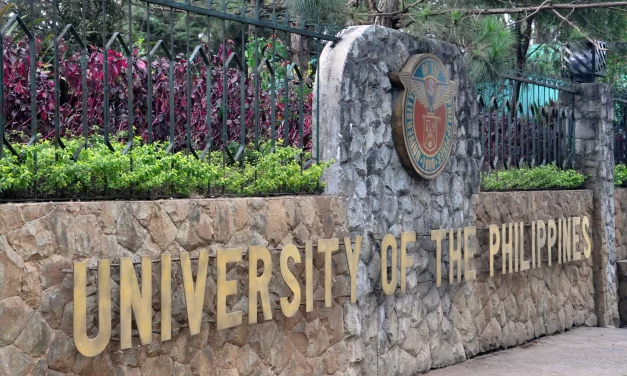
BAGUIO CITY — “Serve the People.”

Two graduates of the University of the Philippines-Baguio (UPB) raised a banner painted with this phrase while singing the university’s almamater song during the university’s commencement exercise at the Baguio Convention Center last April 26.

The University of the Philippines upholds the promise of serving the people since it was established in 1908. The university is a national university given subsidy by the government for those who cannot afford tertiary education. Read the rest of this entry →

Share

KMU observes Labor Day to honor workers

April 28, 2013 in Baguio City, workers

By ALDWIN QUITASOL
www.nordis.net

BAGUIO CITY — Kilusang Mayo Uno (KMU) Cordillera Spokesperson Vicente Dilem stressed that the yearly commemoration of the International Labor Day on May 1 is in honor of the workers who sacrificed their lives fighting for their rights and welfare and advancement of the struggle of the working class for better working conditions and social transformation.

“Ti Mayo Uno ket espesyal nga aldaw dagiti mangmangged nga saan laeng a ditoy Pilipinas a maselebraran nu diket pati iti dadduma a pagilyan. Ditoy da nga ipukkaw dagiti dawat dagiti umili para iti nasay-sayaat a panagbiag babaen iti panagrespeto iti karbengan ken pudno a panagbalbaliw. Saan daytoy a sin-sinan nga aldaw a pangiyaramidan laeng kadagiti job fairs nu sadinno ket maiyawis dagiti pangmabiitan weno kontraktuwal a trabaho,” (May 1 is a special day for the workers celebrated not just in the Philippines but also in other countries. It is a time for the workers to reiterate the people’s demand for a decent life through the respect of rights and genuine change. This is not just an ordinary day where job fairs offering temporary or contractual jobs are held) Dilem explained. Read the rest of this entry →

Share

Bontoc lass rallies Asia-Pacific youth for IP rights

April 21, 2013 in international, youth

By APIYN (PR) with reports from RACHEL BACONOWA

BAGUIO CITY — The spokesperson of the Kalipinan ng mga Katutubong Mamamayan ng Pilipinas (Kamp), a national alliance of indigenous peoples organizations in the Philippines urged the youth specially indigenous youth of the Asia-Pacific region to participate in the mass movement for the full recognition of indigenous peoples (IP) rights.

IP YOUTH CONFAB. Indigenous youth from New Zealand, India, Nepal, Bangladesh, Vietnam, Cambodia, Indonesia, Philippines and Russia and participants from Africa, Panama, and the USA attended the preparatory meeting on the World Conference on Indigenous Peoples (WCIP). The meeting was hosted by Asia Pacific Indigenous Youth Netwaork and Land is Life-USA. Photo by Noel Godinez

IP YOUTH CONFAB. Indigenous youth from New Zealand, India, Nepal, Bangladesh, Vietnam, Cambodia, Indonesia, Philippines and Russia and participants from Africa, Panama, and the USA attended the preparatory meeting on the World Conference on Indigenous Peoples (WCIP). The meeting was hosted by Asia Pacific Indigenous Youth Netwaork and Land is Life-USA. Photo by Noel Godinez

According to Piya Macliing Malayao, a native of Bontoc, there is a need to strengthen the IP youth movement in the global region because only a few countries have IP representations at the national level. She stressed that the United Nations Declaration on the Rights of Indigenous Peoples (UNDRIP) came to be because IP mass movements across the globe asserted their rights even against their own governments.

“We mustccontinue the struggles of our ancestorsc for the sake of our future generation. It is about time to build higher solidarity worldwide”, said Malayao. Read the rest of this entry →

Share

House inquiry bares criminal act vs IP defense of land rights

March 17, 2013 in Featured, indigenous, land rights, national

By RHODA DALANG and BRENDA S. DACPANO

BAGUIO CITY — “Let us differentiate a criminal act from an act in the conduct of defending rights.” This was the message put forth by Representative Teddy Baguilat in reference to the “pangayaw” being waged by Blaans led by Daguil Capion against the Xstrata-Saguitarius Mining, Inc.

Erita Capion during the Congressional Hearing on the B'laan killings last February 21, 2013 in Koronadal City. Erita, sister-in-law of Juvy, is witness to the massacre of Juvy Capion and her children Jordan (13) and John Mark (7). Juvy and her sons were killed by 27th IBPA soldiers led by Lt. Col. Alexis Bravo even if they knew that Daguil Capion (Juvy's husband) was not in the family’s hut in Barangay Kimlawis in Kiblawan, Davao del Sur on October 18, 2012. The soldiers were in pursuit of Daguil, an anti-mining rebel. Photo by Brenda S. Dacpano

Baguilat further elaborated similar practice in the Cordillera, i.e. Fetad in Kalinga, …. where an entire community arm themselves and get mobilized in defense againts those encroaching in their ancestral territory. In substance, acts of this kind are not synonymous to murder. The act is self-defense. This is what many Blaans believe. For the Blaans, Daguil is a hero. For the AFP and Xstrata-SMI, Daguil is a bandit.

Baguilat, representative of Ifugao and chair of the National Cultural Committee of the Lower House of Congress, conducted a legislative inquiry in Koronadal, South Cotabato on February 21 on the massacre of the family of Daguil Capion in October 18, 2012 in Tampakan, South Cotabato. Together with Baguilat in the inquiry were Bayan Muna Representatives Neri Colmenares and Luz Ilagan joined by Mindanao Representatives Manny Pacquiao and Nancy Catamco. The inquiry was hosted by the provincial government of South Cotabato.

The daughter of Daguil Capion who was wounded but survived the massacre recounted how upon hearing the first voulme of gunfire, she immediately sought cover beside her mother who was still lying in bed. “Tumabi ako kay Juvy (Juvy was the mother), nasugatan ang paa niya, sumisigaw siya ng ‘tama na’, … puro dugo…”

The gunfire ended with her two-month pregnant mother and her two brothers, all dead.

Daguil Capion was leading armed Blaans engaged in what they call “pangayaw” against Xstrata-SMI. Daguil was once a forest ranger under Western Mining, the mining firm that first mined in the area. It later sold its mining rights to Xstrata-SMI. Under Xstrata-SMI, Daguil was employed as a forest ranger. He led the “pangayaw” after Xstrata-SMI failed to comply with earlier agreements, the least of which was that SMI shall employ Blaans.

The Blaans are among the 18 indigenous peoples collectively referred to as Lumads in Mindanao. They are facing the mining operation of the Xstrata-SMI that was granted a Financial Technical Agreement (FTAA) to extract through open-pit mining, copper and gold in their ancestral territories. At the heart of the mine site sits the Bulol Lumol, the last remaining watershed area in the SoCSarGen region and is considered a sacred mountain by the Blaans.

In the said congressional inquiry, the Mayor of Kiblawan, Marivic Diamante, testified that Xstrata-SMI is providing a monthly subsidy to military and CAFGUs securing the Kiblawan-Tampakan-Colombio area (KITACO). A Task Force KITAKO was organized under the AFP as security force covering the entire area where Xstrata-SMI operates. According to Diamante, Xstrata-SMI is providing monthly subsidy to cover operational and gasoline expenses for each CAFGU in the anount of P2,500/month for each CAFGU over and above the P2,700 provided by the AFP. For the 60 CAFGUs being subsidized, total sybsidy amounts to P150,000/month. Another P7,500 monthly is being provided to 12 CAFGUs.

On the one hand, Col. Marcos Flores of the 1002 brigade testified another figure of a monthly allocation from Xstra-SMI in the amount of P9,000 for operations, P11,000 for gasoline and P5,000 for allowance being provided for CAFGU.

Meanwhile, Mayor Diamante, unfazed by the the testimony of the Daguil survivor and without remorse testified that she offered a P300,000 bounty for the capture of Daguil. The amount froms part of a P600,000 allocated budget by the LGU for intelligence.

The testimonies from the Mayor of Kiblawan and the AFP, came as a shock to delegates of DINTEG-Cordillera Indigenous Peoples Legal Center. It was distressing to hear how a mining firm is funding the LGU and AFP to secure its interest in the midst of an apparent armed opposition from affected Blaans.

DINTEG and KALUHHAMIN, the organization of Blaans in SOCSARGEN region, supported by KATRIBU partylist, recommended to the Baguilat Committee to conduct another legislative inquiry to look into Xstrata-SMI’ compliance to human rights statutes in relating with the Blaans.

Representative Manny Pacquiao, thoughtful of the impact on the Daguil family, asked the AFP “nandiyan na yan, may buntis at mga batang namatay, ano ang gagawin niyo?” Nothing substantial was heard of from the AFP.

DINTEG participated in the legislative inquiry as a manifestation of solidarity to the Blaans. Blaan is among the pilot areas of DINTEG in its project on capacity building among indigenous peoples on human rights-based approach to development. The project is being funded by the European Union. # nordis.net

Share

Cordillera women set agenda

March 10, 2013 in Cordillera, politics, women

By ALDWIN QUITASOL
www.nordis.net

BAGUIO CITY — Members of different women’s groups and organization as well as individuals under the banner of Innabuyog – Gabriela in the Cordillera region formulated a women’s agenda which will be criteria in choosing and supporting candidates and political parties come May 13 national and local elections.

MARCH 8. The world commemorates the International Working Women’s Day with protest rallies and symbolic actions to call for the end of violence against women and children and the respect of equal rights to all including the lesbians, gays, bi-sexual and transgered. Photo by Aldwin Quitasol

The Cordillera Women’s Agenda contains the key points in advancing the women’s struggles for land, food and rights in their vision of good governance and politics of change.

During the women’s summit where at least 200 attended, the agenda was composed from the resolutions of the different workshop groups on the issues faced by women of today. This coincides with the 103rd commemoration of March 8 as the International Working Women’s Day (IWWD) held at the multipurpose hall of the Cathedral of the Resurrection – Episcopal Diocese of the Northern Philippines (EDNCP) in Baguio City.

On food security and environment sustainability of indigenous women and our commitments, the delegates declare that the control and utilization of the land and natural resources should be in the hands of the communities and not to be sold by the government to corporations and to the powerful people. The women also stressed the disallowing of large, corporate and profit-oriented projects which they say violate the rights of indigenous peoples and communities which affects their lives and livelihood.

The women stated that promotion and enhancement of the initiatives and viable practices of communities employing indigenous practices on the management of agriculture, forestry and natural resources should be included in the agenda of candidates and political parties.

Included in the agenda is the focus on the job and equal economic opportunities for women. The group pointed out that employment chances should not mean the sending of women overseas as slaves. They stated that the government should prioritize its support to sustainable jobs. They challenge soon to be elected officials to not allow local and foreign corporations who only take advantage of cheap labor in export processing and commercial zones in the Cordillera for contractual jobs and do not provide benefits to the workers.

They also urged political candidates when elected to ensure that livelihood projects of the government should not be another source of corruption and waste of budget. It was also stressed in the agenda that the livelihood projects of women should not be allowed to be devoured by big businesses.

Regarding women’s access to social services, the group added that a higher budget should be allocated to health, education and welfare that are readily accessible, affordable and available. This according to them would reduce the morbidity, mortality, illiteracy and dis empowerment of women and their families. They also call for the stop of privatization of public social services.

The women’s group included in the agenda the protection of women from all forms of violence. They said a reduction in the number of cases of violence against women and children should be seriously worked out that reflects the effective advocacy and services of local government units and concerned agencies.

The agenda included the challenge to the elected officials in upholding the respect to the rights of lesbians, gays, bi-sexuals and transgendered (LGBT). They state the prevention of the suppression of the rights of the LGBT.

The group also call for the elected officials to be one in the forefront in demanding justice for victims of human rights violations especially women victims. They stated that the officials when in power should not allow the encampment of military troops in the communities and especially schools, daycare centers, barangay halls and clinics and other public buildings.

They also stressed the delivery of support services to the communities inflicted with rights abuses brought by militarization be enabled in partnership with non – government organizations as well as peoples’ organizations.

The women declared that the agenda be another step of women’s empowerment in making the women a force to contend with during the elections. They stated that it will be their voice in dealing with the politicians and political parties who will woo the votes of women. # nordis.net

Share

Baguio shakes in One Billion Rising

February 17, 2013 in Baguio City, international, women

By ALDWIN QUITASOL
www.nordis.net

BAGUIO CITY — On Valentines Day February 14 at 3:30 PM, more than eight hundred women, men and children shook Upper Session Road here as they joined the global one billion rising to end violence against women and children.

ONE BILLION RISING! Strike, Dance and Rise! a dance revolution participated by hundreds of women, children and men, a dance revolution resounding expression of convergence of the people from every walks of life to end the culture of violence against women and children worldwide, at Upper Session Road February 14,2013. Photo by Delia Bagni

Members of different sectoral organizations, government agencies and individuals here heeded the worldwide battle cry to “Strike! Dance! Rise!” in the locally coordinated activity lead by Innabuyog-Gabriela.

In a short interview, Innabuyog-Gabriela chairperson Mila Singson, said the dance revolution is a resounding expression of convergence by the people from every walk of life to end the culture of violence against women and children. She said Baguio is one of the many places in the Philippines participating in the global dance revolution where people converge for a single reason, to end the violence.

Photo Gallery of One Billion Rising

She expounded that every day and every week, there are reports and complaints of beating of women and children, rape incidents and other forms of violence, raising the awareness of the people in common activities like this is a beginning to the campaign to end violence all over.

Congressman Neri Colmenares of Bayan Muna who joined the dancing here said the worst form of violence against women and children is poverty. He added that with the call for respect of the rights of women and children is the analysis of the causes of poverty in a society that breeds suffering of the people and how to address it.

Neri said the Aquino government has driven the Filipinos into the present situation of extreme poverty. Making it therefore the number one perpetrator of the violence. He said that it is time for the people to act and end all forms of violence, end violations to the rights of the people.

Katribu Indigenous Partylist President and first nominee Beverly Longid said that while domestic violence against women and children in the region is undeniable, it is also being worsened by the militarization of indigenous communities especially in the territories with mining operations and mining applications.

She said there are many cases of rape in the Cordillera of married or unmarried women and children where soldiers are the perpetrators. She said Katribu is rising against the exploitation of women and children side by side with its campaign for the end of militarization of villages and the respect of ancestral lands and indigenous cultures.

Longid said that no one deserves to be maltreated because of sex, age and gender at the same time should not be persecuted on the basis of one’s ethnicity, culture and religious beliefs.

In a statement, Katribu salutes the women of the world, the women who fought for ancestral lands and self determination so that succeeding generations may live. The IP Partylist also stated that in its participation in the one billion rising, it also honors the indigenous women and takes inspiration from their legacy.

Another women and children’s right advocate Rob Ocampo introduced the growing number of “V men” who started from the original group of the “men in purple” for the support of the cause of women and children for respect of their rights and welfare.

He said more and more men are joining the cause to end violence against women and children in the city and else where. He added men not only here in Baguio who are famous personalities and private individuals responded to the call of one billion rising. He stressed that it is more becoming of a gentleman to actively participate in the campaign to stop the violence.

Indigenous groups came in their traditional native garb from different provinces of the Cordillera and led the community to a pattong in the concluding dance of the activity. # nordis.net

Share

Abuse of women, children increase in Baguio

February 17, 2013 in Baguio City, women

By DELIA BAGNI
www.nordis.net

BAGUIO CITY — Women and Children Protection Unit Center head Police Senior Inspector Divina Mencio said that number of abused women and children in the City of Baguio doubled as of January to February 2013 during the launching activity of the Kababaihan festival at the City Social Welfare and Development Office (CSWDO) conference hall, February 13, 2013.

Mencio added that at the first quarter of the year reported 108 of cases of violations against women and children as compared to last year’s 56 cases. Most of the victims were subjected to physical abuse.

Mila Singson of Inabuyog Gabriela also added that the month of January, 2 cases of rape was recorded in the city.

CSWDO officer Betty Fangasan said that up to date there is a noted increase in number of victims however, they are conducting seminars and trainings to raise the awareness of women on their rights. She added that as of now CSWDO has registered 84 women barangay organizations and out of this 60 are active in implementing programs for their own members, built cooperatives that finances members that are in need and many more. # nordis.net

Share

Democratic rights top 2013 NL youth agenda

February 3, 2013 in NL general, youth

By NUSP-BB (PR)

BAGUIO CITY — Around 200 delegates of various youth organizations from the Cordillera, Cagayan Valley and Ilocos regions gathered in a two day summit and formed the 2013 youth agenda at Teachers Camp, last January 26 to 27.

The summit dubbed as 2013 Think Change North Luzon Youth Summit was led by the Cordillera Youth Center, Anakbayan Cordillera, College Editor’s Guild of the Philippines Baguio-Benguet, National Union of Students of the Philippines Baguio-Benguet and the Sangguniang Kabataan Federation of Baguio City.

Highlighting the North Luzon Youth agenda is the assertion of the right to education which includes the scrapping of the 300% ladderized tuition fee increase in the Cordillera State Universities and Colleges. This is extended as a critique of the government’s moves to commercialize education as manifested by the decreasing state subsidy and its encouragement of State Universities and Colleges (SUC’s) to be self-sufficient and to welcome income-generating projects and private tie-ups.

Also, the right to decent employment was raised. This includes the creation of jobs that square with the abilities and educational attainment of the youth and more vitally, jobs that attune with the conditions and the needs of the country. Implicitly lambasted is the burgeoning of labor migration which is only a result of the lack of jobs and the inhumane wages of workers in the country.

The defense of human rights, including the right to a safe and healthful environment also got into the list of concerns of the youth. The vilification of legitimate youth organizations, the militarization of campuses and communities, the cutting of trees in Luneta Hill to give way to a parking space – all of these were condemned by the North Luzon youth and which they pledge to continue acting against.

In the afternoon session of the summit’s first day, the participants were divided into three workshop groups according to three identified issues: education, human rights and environment. The workshop groups initiated a sharing of experiences among the delegates in order to specify the issues of the youth in specific communities and ultimately to map systematic steps that can be taken to respond to the issues raised.

As the three groups gathered back together, they crafted what will later be called as the North Luzon Youth Agenda which is comprised of the particular demands of the youth to the candidates for the mid-term elections.

As a major bloc in the population of the society, the youth agenda is underlined by the framework that the issues of the youth, crafted by members of the sectors themselves, should be a priority among the candidates. The youth should make use of their comprising more than half of the registered voters in order to call attention to their demands. As these demands were articulated after the thorough discussions and sharing of actual experiences of the delegates in the Summit, there is nothing but the collective interest of the youth hankering for a better nation and a better future.

The condition of the youth is a condition for dissent

In the two-day summit, the delegates listened to various discussions magnifying the issues they should confront as the emerging sector of the country and exchanged ideas on how to address these issues.

Einstein Recedes of Kabataan Partylist delivered the Keynote Address where he elaborated on the various issues of the youth from their schools, to their communities and the workplaces. As the perennial problem faced by the youth, most of which are studying in schools, Recedes emphasized the tuition and miscellaneous fees increases, along with the redundant fees. He also underscored the rate of unemployment and its aggravation by the lack of jobs created that is suitable to the needs of the country.

He added that the civil and political rights of members of progressive youth organizations are being violated. He particularly mentioned the vilification of progressive youth organizations advancing the interests of the sectors in their different areas.

Recedes reiterated that given these existing conditions that stifle the energies of the youth, the youth has no better option than to keep on acting together and continue expanding their ranks in order to register a louder voice of dissent.

“In this venture, the youth should bear in mind the tripartite modes of engagement that they should follow as a more effective way of confronting their issues: arousing, organizing and mobilizing. Invoking and at the same time recasting Rizal’s hackneyed proposition on the youth as the hope of the nation. Kabataan, ‘wag nang hintayin ang kinabukasan, maging pag-asa ng bayan, ngayon!” Recedes stressed.

Bringing back the 70s spirit

The first day was culminated with a unity parade along Session Road and the City Market with the participating organizations bringing on their banners and their funky 70s attire. In fostering the spirit of the First Quarter Storm during the Marcos regime, the 70s theme was upheld to showcase the youth’s continuing commitment to be involved towards the betterment of the society. Several bands and cultural groups such as Salidummay, Kultura and Maxim performed along with the delegates from each province.

In the last day of the Summit, the delegates were grouped according to their province and then shared the specific issues in their communities. The entire Summit was capped by the formation of the alliance called Fight for our Right to Education, Employment, Environment and Democratic Rights (FREEDOM) which will serve as the coordinating body among the provinces and the various organizations as the collaborate in resolving all the issues brought up in the two-day activity. The individuals and member organizations of the alliance are also expected to broaden the network by propagating its ideals and garnering more members. # nordis.net

Share

Labor Watch: The good news for now

January 27, 2013 in columns, Featured, general welfare, law, opinion, workers

By ALDWIN QUITASOL
www.nordis.net

“O snail, Climb Mount Fuji. But slowly, slowly!” — Kobayashi Issa

Last week, the Committee of Labor and Employment (COLE) of the House of Representatives (HOR) headed by 2nd District of Northern Samar Representative and COLE Chairman Emil Ong spearheaded the Luzon wide consultation on the P125 legislated wage hike or the House Bill 375. The hearing was facilitated by Benguet Congressman Ronald Cosalan who is also the Vice-Chairman of COLE. The event was attended by representatives of progressive party lists and members of national and local organizations, unions and workers’ associations. Incidentally, nobody from the employers or business sector showed up to register their opposition to any wage increase as they did every time a public hearing on wage relief takes place.

During the hearing, Chairman Ong told the people that he heard that he prioritized going to the boxing match of two internationally famous boxing champs. He justified his presence at the ringside of that event saying he was there to show support to an Overseas Filipino Worker (OFW) who was carrying the pride of the country. To other of his followers, it was reasonable. To many workers who are impoverished and can barely feed their families and send their children to school, such is shameful.

The representatives from the Department of Labor and Employment (DOLE) and particularly the Regional Tripartite Wages and Productivity Board (RTWPB) of the Cordillera Region were there. They aired their side by saying they are not actually against any wage hike but they are seeing to it that any increase is fairly balanced to the employers and investors. They also say that increases are based on every region’s standard of living. A representative of the workers raised a valid concern, what if the worker works in a region where wages set by the local regional wage board is low and he lives in another region with a higher cost of living? And is it not that businessmen buy (import) their products from the National Capital Region or any central source of produce in bulk and sell it in the provinces at higher prices to ensure profit and return of capital? A simple rule in the business world. So the effect is that prices will be higher in some places.

The P125 wage hike demand started way back mid-1999, that is over a decade ago by Filipino workers and their families who want to make their daily wage cope with the rising of prices and cost of services. Many labor leaders, union members and heroes who struggled alongside with fellow workers and Filipinos died not knowing where this fight has gone to.

For over 14 years the poor Filipino workers waited for the approval of the P125 while witnessing and taking in the brunt of unhampered rise of prices and the cost of living. Though a sub-committee will have to make reports of the approval of the wage hike demand from the public hearing at La Trinidad, Benguet, the people were relieved and their hopes raised that the bill will be tackled in the remaining sessions of Congress.

For the members of the Congress who are seeking re-election, now is the time to impress the workers and seriously pass the P125 wage hike demand. And if that is done, the Filipino workers always know how to return favors despite the many centuries that capitalists used their brain and brawn without any gratitude. # nordis.net

Share

Militants rally support for passage of P125 wage hike bill

January 20, 2013 in Baguio City, Featured, law, national, workers

By ALDWIN QUITASOL
www.nordis.net

BAGUIO CITY — Leaders and Members of the Kilusang Mayo Uno (KMU) and Anakpawis Partylist picketed the House of Representative (HoR) committee on labor and employment (COLE) consultation on House Bill 375 or more popularly known as the P125 wage hike bill to rally support for its passage.

The HoR committee led by its Chair Northern Samar 2nd district Congressman Emil Ong and Vice Chair Benguet Congressman Ronald Cosalan conducted a consultation on HB 375, a house bill providing for a P125 daily across the board pay hike for private sector workers on January18 at 9 AM at Valley Hotel, La Trinidad, Benguet.

According to Anakpawis-Cordillera Regional Coordinator Michael Cabangon, similar consultations have already been done in Mindanao and Visayas. He said the consultation here in Luzon should produce positive results before the Congress Session resumes on January 21.

Cabangon said that the House Bill 375 should not end up only in consultations but be included in the priority list of agenda for Congress as there are only 9 remaining sessions before the national and local elections campaign period starts.

Cabangon said that there is no reason why the bill cannot be passed. He said that the present administration has already enacted the sin tax bill and RH bill yet it seems that it forgot the hungry workers and their families. He reiterated that they demand the approval of the bill before the election starts.

In the position paper of the KMU-Cordillera that will be submitted to the members of COLE, the labor organization stated that workers are the builders of the nation and creators of production for the progress of a country therefore they have all the right to a decent and living wage. The group said that the congress should consider and analyze the latest statistics of the National Economic Development Authority (NEDA) that a family of six needs P987 to survive in a day.

KMU stated that the proposal for a P125 wage increase was submitted to the congress in 1999. Cabangon said that is already more than 14 years ago. According to KMU, the demand for an increase to the minimum wage will mean much to the workers like here in the Cordillera Region where the workers were receiving a minimum daily of P190 that time.

According to KMU national president Elmer Labog in a phone interview, the workers have waited in vain for 14 years. He said that they suffered from meager wages for a long time aggravated by the continues fast rising prices of basic commodities and services.

Labog stressed that they do not believe the claims of the Employers Confederation of the Philippines (Ecop) that the wage increase will bring a “disastrous impact” where prices of goods will rise up, small companies and shops will close and massive retrenchment will follow.

According to KMU, businessmen tend to deduct their salary expenses from their yearly gross sales or income and they will add this to their operational funds for the next year that will be used for their workers’ wages.

The group added that the wage increase will not be automatically implemented by the small enterprises and they will plead to the Department of Labor and Employment (DOLE) because of their small incomes. In the Cordillera, 77% of the employers did not yet fully implement the P280 minimum wage increase for various reasons.

Labog also said that there is no truth that the investors will go out of the country as they have big interests on the nation’s mines, natural resources, schools, universities, hospitals and energy resources that can not be found in other countries.

Labog, however welcomes as urgent these congressional consultations on the bill based on a KMU initiated call 14 years ago for a P125 salary increase. # nordis.net

Share

Dominion buses sequestered; Sales from auctioned buses to partially cover TEU’s claims

November 25, 2012 in Featured, Ilocos, transport, workers

By ROD TAJON and KYLE EDWARD FRANCISCO

VIGAN CITY — Times Employees Union (TEU) scores yet another victory as the National Labor Relations Commission (NLRC) sequestered four buses of the Dominion Bus Lines after serving the Writ of Execution for a Supreme Court ruling ordering the said bus line to pay its workers P97 million for various claims of unpaid wages and benefits from decided labor cases, last November 22.

Three of the buses were impounded at the main terminal in Vigan, while the other one was impounded in Bantay, Ilocos Sur while it was heading south.

The buses are set for public auction on the last week of November. This would partially cover the wages and benefits of the workers, as ordered by the Court.

NLRC Sheriff, Atty. Ronnie Jalalain, several policemen and officers of TEU served the Writ of Execution to MenCorp, owner of Dominion Bus Lines (formerly Times Transit, Inc.) last November 22. It was received by the legal counsel of MenCorp, Atty. Joel Marquez.

Noel Susa, one of the leaders of TEU, noted that this recent development was the result of their collective struggle. He said that the members of the union welcome this move of the NLRC, “but we vow to continue the struggle until we attain our ever-elusive victory.”

The issuance of the Writ of Execution came after the NLRC Arbiter Patricio P. Libo-on junked the Urgent Motion to Inhibit and Third Party Claim filed by Mencorp and Melissa Lim.

The NLRC decision issued last November 15 ruled that “the motion for inhibition has no basis” citing that “in no instance that the NLRC disregarded the right of any of the parties nor showed bias for other party.”

It further stated that “granting Melissa Lim purchased the majority stocks of Mencorp” the properties of Mencorp can still be levied to satisfy the monetary award. The commission underscored the effort of Mencorp to “further delay the execution” of the Supreme Court judgment and directed the NLRC sheriff to proceed with the execution.

On November 2, TEU-NAFLU-KMU marched 400 kms, from Ilocos Sur to NLRC to demand for the implementation of the Court’s decision and to stop Labor Arbiter Patricio Libo-on from inhibiting himself from the case. A week after, the later dismissed the third party claim from MenCorp and prevented Libo-on from inhibition. # nordis.net

Share

Send PAO lawyers abroad to help distressed OFWs — Bayan Muna rep

November 18, 2012 in international, law, migrant

By VINCE BORNEO

QUEZON CITY — Partylist representative Teddy Casiño  today called on the country’s public attorneys to continue widening their services to poor Filipino clients and suggested that the agency set its sights on extending its services to distressed Filipino workers abroad.

Speaking at the Public Attorneys Office Visayas-wide Seminar Workshop on Codes and References, Casiño said stationing PAO lawyers abroad to assist overseas Filipino workers (OFWs) facing criminal charges at the early stages of the case would help greatly in reducing convictions.

Casiño is principal author of Republic Act 9406 (PAO Law of 2008), officially titled  “An Act Reorganizing and Strengthening the Public Attorney’s Office (PAO), Amending for the Purpose Pertinent Provisions of Executive Order No. 292 Otherwise Known as ‘The Administrative Code of 1987’, as Amended, Granting Special Allowance to PAO Officials and Lawyers and Providing Funds.”

Under Casiño’s PAO Law, more than 400 additional lawyers were hired by the agency to provide free legal assistance to poor litigants in the country. The status and salary grades of PAO lawyers were also upgraded to equal that of public prosecutors while the agency itself was granted administrative and fiscal autonomy from the Department of Justice.

“It is often the case that our OFWs are not aware of their rights nor provided competent counsel when getting into trouble. In many cases, embassy officials enter the picture very late and yet do not have the competence to assist the person in need. Our PAOs can ensure that the rights of our OFWs are protected at the critical early stages of the case,” he said.

He revealed that under the PAO Law, the agency is already empowered to send lawyers abroad to help OFWs provided other agencies like the DFA, OWWA and DOLE help in providing the proper mechanism.

“PAO lawyers can extend services to distressed OFWs facing a variety of cases here and abroad. The idea is to initially post PAO lawyers in countries where there are large concentrations of OFWs who need legal services but otherwise cannot afford to do so.

This is new and I hope to work with your agency to bring this idea into reality in the near future. This will make the PAO an agency for poor Filipino clients here and abroad,”  Casiño said.

“I highly commend the PAO considerable growth in the last six years since RA 9406 was signed into law. You have expanded the agency’s services by aiding close to six million (5,835,027) clients in 2011.  That means that PAO lawyers have handled close to 700,000 cases – assisted an average of  3,806  clients with 470 cases handled by each lawyer. This is a testament of your public service at the best level attainable,”  Casiño said. # nordis.net

Share

Labor Watch: 15 years, justice still awaits

November 11, 2012 in columns, employment, Featured, Ilocos, opinion, workers

By ALDWIN QUITASOL
www.nordis.net

And it also become clear that these conditions of inequality and historical injustice have given rise to a feeling of hate in the world – a deeply felt hate that cannot easily be overcome with a few good words — Ulrich Beck

On November 2, more than 50 members of the Times Employees Union-National Federation of Labor Unions-Kilusang Mayo Uno (TEU-NAFLU-KMU) marched the streets of Vigan City, Ilocos Sur to tell the public about their struggle for labor and other democratic rights. From there, they proceeded to the highway leading to the National Capital Region particularly to Quezon City where the main office of the National Labor Relations and Commission-Department of labor and Employment (NLRC-DOLE) is located.

They were marching some 400 kilometers, to demonstrate the seriousness of their demands that for the past 15 years they have struggled to obtain – justice. They will march to demand NLRC to immediately implement the Supreme Court ruling in their favor that was scheduled for implementation on October 29 to 30. These workers of the Times Transportation Company Inc. were awarded P97 million in back wages, benefits among others by the Supreme Court.

It was in 1997 when they formed their union and registered it. Just like in other workplaces where the company bosses are allergic to unions, the management tried to contest the legitimacy of the registration of their union, and demand that it will be canceled.

The workers went on strike. The labor secretary that time assumed jurisdiction quashing the efforts of the workers to force the company to give to their demands of recognition. Then the company fired its workers especially those who were active in the union. The workers set out another strike then again the labor secretary declaring the workers action illegal.

The management sold its certificate of public convenience and its buses to another company to prevent the terminated workers from getting their monetary claims. They also bought off two of the union’s leaders.

Five years later, the labor arbiter that time issued a decision favoring the workers giving them right to monetary claims and the workers be reinstated. But the management exhausted all legal remedies in a bid to reverse the decision.

The Court of Appeals affirmed the earlier decision on 2004. Seven years have passed after the legal battles, no worker was given back their jobs or paid their money. For all the years that they fought, some of them had died, hoping that they be vindicated.

For 15 years that TEU members fought for their rights in the face of other challenges in life. After walking for miles, NLRC just denied their demand for the implementation of SC’s decision.

No such words can describe how agencies mandated to serve for the interests of the people who are paying taxes and making the production of the nation being instruments of the rich and the elite. # nordis.net

Share

Attacks on indigenous peoples escalate

September 16, 2012 in human rights, indigenous, national

By KAMP and KATRIBU (PR)

QUEZON CITY — Various human rights, religious and indigenous groups staged a protest action in front of the Department of National Defense (DND) in Camp Aguinaldo on September 12, Wednesday, condemning the military and paramilitary forces on their attacks on indigenous peoples communities including schools.

According to the Kalipunan ng mga Katutubong Mamamayan ng Pilipinas (Kamp), even rural community schools are now  being branded as “NPA Training Grounds”, “Rebel Schools” or “Red Schools”. They said government soldiers  also questioned the existence of alternative learning centers, Literacy-Numeracy schools and traditional schools in CARAGA, SOCKSarGen, Northern and Southern Mindanao, teachers and para teachers including school children were also subjected to interrogations.

Beverly Longid, national president of Katribu, said the schools initiated by the indigenous peoples themselves and several non-government and religious institutions should be recognized by the Department of Education (DepEd). “DepEd should in fact support these programs as it does not only provide literacy and numeracy, but it also incorporates teaching of indigenous language, songs and dances, customary law and values,” Longid said.

Meanwhile, human rights violations also continue to escalate in IP communities. 151 cases of extrajudicial killings on IPs was recorded by KAMP during the term of Gloria Arroyo. Since President Benigno Aquino III took power in June 2010,  17 indigenous peoples have been victims of extrajudicial killing.

Piya Macliing Malayao, spokesperson of  KAMP, explained that vilification is part of the government’s counterinsurgency scheme articulated in the Oplan Bayanihan. “The red-tagging of organizations and leaders are meant to justify attacks made upon them by the fascist State that endorses operations of plunderous development projects and business such as dams, logging, and mining,” she reiterated.

According to data gathered by KAMP, IP leaders and their organizations are tagged as “NPA” or “Fronts of NPA”. Their communities are also labeled as “NPA Hotspots” or “Red Areas”.

Malayao said that because of  military operations in indigenous communities, IPs are forced to evacuate from their ancestral lands. From 2008 to present, mass evacuations  are being documented in IP communities like Lianga, Marihatag and San Agustin of Surigao del Sur; San Luis and Esperanza in Agusan del Sur; Kitcharao, Agusan del Norte; Talaingod, Davao del Norte; and Tinoc, Ifugao. KAMP said children are the most affected by these evacuations. Many of them are stricken with illnesses and cry of hunger.

Concurrently, while the government says that the military presence in rural communities is for “peace and development” more and more cases of harassment and extrajudicial killings happen in militarized communities and where there are operations of  mining, logging, dams etc.  Because of these experiences, Longid reiterated that militarization in communities is either for counterinsurgency operations or investment defense force or both. “The escalation of human rights violations or vilification are the effect of the escalating struggle of the indigenous peoples  in defending their ancestral lands from incursions of these development projects and businesses,” Longid added.

She said the attacks on IPs  and any forms of political vilification must be ended now. “The government should address these human rights violations to fulfill its commitment in international humanitarian agreements and programs on IP,” Longid said.

She further said that with regards to the schools, the government must have strict compliance with the provisions of the RA 7610 or Special Protections of Children against Abuse, Exploitation and Discrimination. She also said that a dialogue with Department of Education with the help of the Office of ACT Teachers Partylist was already conducted to further discuss how to address the attacks on schools.

Victims from various indigenous communities affected by military operations also shared their experiences on human rights violations by the government soldiers in their communities including community schools. # nordis.net

Share

Kabataan rep addresses Ifugao youth

August 19, 2012 in Cordillera, youth

By DEXTER LUNAG

LAMUT, Ifugao — On August 3, Kabataan Party list Representative Raymond ‘Mong’ Palatino delivered the key note speech addressing the role of the youth during the Leadership Training Workshop and Youth Forum on “Molding the Youth as the Forefront of Tomorrows Challenges” sponsored by the University Student Supreme Government (USSG) of the Ifugao State University (IFSU).

Palatino reiterated the youth’s a unique position as future leaders to solve the problems of this current generation. He emphasized that “the youth are the hope of the nation” and that students must assert their interest as a sector to defend and promote their rights and welfare.

He added that students are encouraged to organize to tackle pressing issues collectively and democratically.

“The budget increase for Education was the harvest of the labor waged by students throughout the Philippines,” stated the Congressman in reference to the student strike that was born out of the state’s abandonment of state services such as education and health.

Palatino discussed also the issues and situations that the youth are facing and answered questions from the student audience during the open forum.

Meanwhile, Dr.Cerafin L. Ngohayon, president of IFSU, while introducing Palatino, also apologized to the Kabataan Partylist scholarship beneficiaries for the harassment and vilification dealt them by military elements believed to be under the 86th IB and military intelligence group.

In this connection, earlier this year, the UNICEF sent a notice to the Department of Education (DepEd) to conduct a fact finding mission on the human rights violations against Kabataan Party list beneficiaries. Fact sheets were sent to the Committee on Human Rights and the Cordillera Human Rights Alliance for further investigation and documentation. # nordis.net

Share

Babbai ti MP, naikkan ti oryentasyon

July 15, 2012 in Cordillera, women

Ni RAQUEL PUL-OCAN
www.nordis.net

BAUKO, Mt. Province — Immabot 55 a babbai agraman ti walo a lallaki ti dimmar-ay iti maysa nga oryentasyon ti Kababaihan nga insayangkat ti Alyansa Dagiti Pesante iti Taeng Kordilyera-Montanyosa Chapter (APIT-Mon) idiay Barangay Tapapan iti nasao a munisipalidad idi Hulyo 10, 2012.

Ti aktibidad ket naballigi a naipatungpal iti panakitin-nulong dagiti Barangay Health Workers ken mangidadaulo kadagiti babbai ti lugar.

Ditoy nga naadal dagiti kababaihan ti dipenasyon ti Human Rights a nakapaunegan dagiti linteg para kadagiti babbai kas iti (CEDAW) Convention for the Elimination and Discrimination Against Women kas linteg nga mang protektar kadagiti babbai ken ti United Nations Declaration on the Rights of Indigenous Peoples (UNDRIP), linteg para kadagiti nainsigudan nga umili a paka-ibilangan dagiti nainsigudan a babbai a bulnerable iti naduma-duma a purma ti panag abuso. Oryentasyon ti Kababaihan nagballigi nga naisayangkat.

Ti oryentasyon ket pag-rugian dagiti inna a mang-adal kadagiti pagpigsaan da a tumulong iti asawa da a lallaki para iti pamilya ken iti nalawlawa pay a saklaw. Kuna ni Annie Paculan, Human Rights Officer ti kababaihan ken maysa kadagiti representatibo iti International Women’s Celebration idi March 15,2012 idiay Bangaan,Sagada, Mountain Province, “Saan nga basol ti panag-innadal. Karben-gan ti tunggal maysa nga mang adal kadagiti karbengan pang tao tapnu usaren nga mang depensa iti pagsayaatan ti kaaduan karkaro dagiti maidad-dadanes a pakaibilangan dagiti nainsigudan a babbai, saan a para iti bukod a pagsayaatan laeng.”

Karit kadagiti kababaihan nga makipaset kadagiti innadal nga isaysayangkat ti naduma-duma nga ahensya ti gobyerno ken dagiti NGO wennu progresibo nga organisasyon para iti panang-padur-as iti pigsa ken laeng. Kuna dagiti dimmar-ay a ti panag organisa iti kababaihan ket dakkel ti tulong na iti uneg ti komunidad ken iti pagilian agsipud ta addaan da iti pigsa nga mang idaulo iti maysa nga organisasyon wenno ili. # nordis.net

Share

Women’s Front: EO 70 to intensify militarization, VAW

July 15, 2012 in columns, Cordillera, Featured, mining, opinion, women

By INNABUYOG-GABRIELA
www.nordis.net

President Benigno Aquino III finally signed his executive order outlining his administration’s policies on mining last July 6, 2012. The EO says that granting of new mining contracts is prohibited aside from the increase in excise tax on mining from 2% to a range of 5-7% that it is proposing.

Yes, the EO is saying that exploration could continue; mining companies could carry on their destructive activities. It does not say that large-scale mining operations should be stopped. It does not say that mining companies should control their greed and respect the land, life and rights of the indigenous peoples. The EO No. 79 will not reposition the current mining operations in the country toward national development. Hence, it will allow the big mining players to legitimately plunder our natural resources and displace the affected communities of indigenous peoples.

We cannot deny the fact that the Cordillera is rich in natural resources and is considered as a vast mineral land. Metallic and non-metallic minerals could be found anywhere in the region making every province a mineral district. With these, foreign mining companies continue their extractive activities, at the same time, many become more interested as shown by the increasing number of mining applications in the region.

Where there is mining, there is militarization. The military start to immerse in the communities once mining applications are approved or when there is resistance from the indigenous peoples. This is because the military serve as the private security group of the mining companies. Their barracks could be found near where there are operations or where the mining companies are situated. And their task is to secure the area from any kind of opposition from the communities affected.

Oplan Bayanihan may be the justification of the military of their presence in the communities but “winning the peace” is not their real agenda. Hence, they do otherwise as proven by the extreme militarization in the different provinces of the Cordillera. They use schools, health centers, and barangay halls as barracks.

Worse, the military woo and even rape women and children in the host communities as what had happened in the case of Isabel, a sixteen-year old 4th year high school student from the mining town of Mankayan, Benguet. She was not able to join her graduation rights due to the trauma inflicted on her by Capt. Danilo Lalin and the other men of the 50th Infantry Battalion. To date, Isabel cannot return home due to security threats.

If before, the military present themselves as military men when trying to court the women of the community, now, as reported by our communities in Kalinga, they will only admit they are military personnel in the middle of the relationship. This new scheme of so-called “courtship” or taking liberties with women is the worst! Deceiving our innocent women is still forcing their way.

With the ratification of the new executive order on mining, our land and resources will not only be the ones affected but also our life and rights especially that of women and children. Since the EO does not aim to stop existing large-scale mining operations, militarization will worsen and eventually not end. More women and children will be more vulnerable. Mining companies will get rich, the mining industry will be fully controlled by the national government denying the local government units their rights to regulate or prohibit mining operations in their jurisdiction, while more violence against women and children will increase. In a nutshell, it (EO 79) does not cater to the betterment of the Filipino masses, instead, it is for the benefit of the government bureaucracy and foreign monopoly capitalists.

In this regard, Executive Order No. 79 is not what we want. It is not the mining policy that the indigenous peoples and the women and children want. It is just a continuation of the Mining Act of 1995 which serves the interest of the few. What we push for is the Alternative Minerals Management Bill (HB 4315) or the Peoples Mining Bill pending in Congress which seeks to reorient the current policy on the ownership, management and governance of minerals, quarry resources, and gemstones towards a rational manner for national industrialization and local development.

We thus challenge the current administration to revoke the Mining Act of 1995 and the Executive Order No. 79 and, instead pass the Peoples Mining Bill. We also challenge the President to remove all state agents in the indigenous peoples’ communities not only in the Cordillera but also in the other regions. We do not want our women and children to become victims of violence. We no longer want our natural resources to be raped by imperialist greed. We no longer want to suffer. We want national industrialization and local development.

Stop the violence against our women and children. Stop the plunder of our natural resources. Pass the Peoples Mining Bill. Down with US Imperialism! # nordis.net

Share